وطن

مدونة

مدونة

  • Tungsten Carbide vs Tungsten-Titanium Pad Printing Rings for Pad Printing: How to Choose?
    Tungsten Carbide vs Tungsten-Titanium Pad Printing Rings for Pad Printing: How to Choose?
    Sep 09, 2026
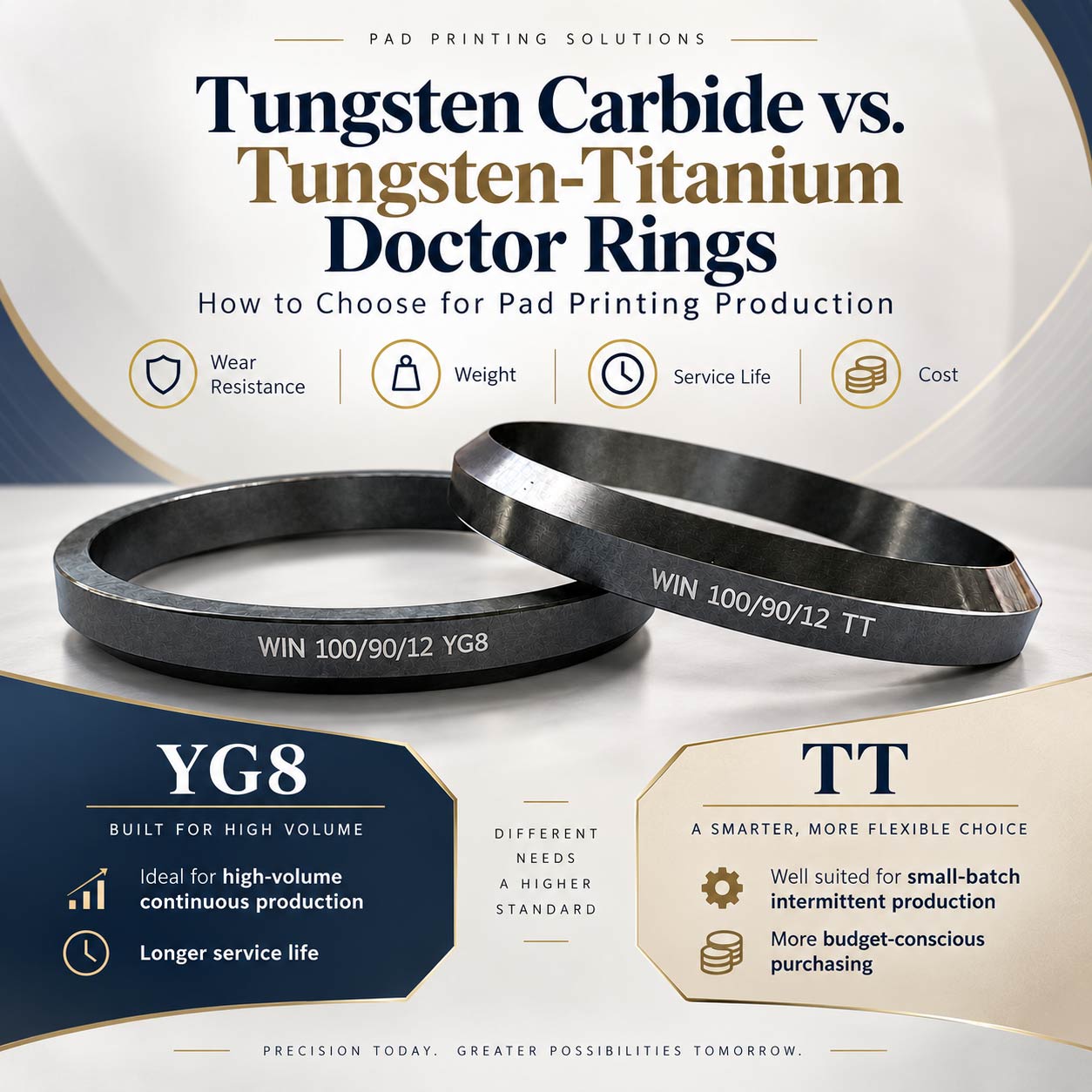
      In pad printing production, the pad printing ring used in a sealed ink cup may look like a small consumable component, but it plays an important role in ink doctoring quality, ink cup movement, production stability, and maintenance frequency. Different pad printing ring materials offer different levels of wear resistance, weight, service life, and cost. For this reason, choosing a pad printing ring should not simply be about selecting the most expensive option. The better approach is to match the ring material with your production volume, operating frequency, application conditions, and cost requirements. WINNEO currently offers two common alloy pad printing ring options: YG8 Tungsten Carbide Ring TT Tungsten-Titanium Ring Although the two rings can have very similar dimensions and appearance, their material composition and application positioning are quite different.   1. Key Differences Between YG8 Tungsten Carbide and TT Tungsten-Titanium Rings Using the WINNEO 100 × 90 × 12 mm test specification as an example, the differences between the two materials are relatively clear. Item YG8 Tungsten Carbide Ring TT Tungsten-Titanium Ring Model YG8 TT Test Size 100/90/12 mm 100/90/12 mm Main Ingredients WC 91%, Co 8%, Other 1% WC 20%, TiC 60%, Co/Ni 18% Scratch Resistance ≥300,000 cycles ≤200,000 cycles Sample Weight 203.64 g 99.31 g Price Positioning More sensitive to tungsten material prices More cost-friendly Recommended Use High-volume continuous production Small-batch or intermittent production It is important to note that: Scratch-resistance cycles should be treated as reference data rather than a guaranteed service-life figure. Actual pad printing ring life depends on many operating factors, including the condition of the printing plate, ink type, doctoring pressure, ink cup installation, machine setup, cleaning and maintenance practices, and the production environment.   Why Is the YG8 Tungsten Carbide Ring Much Heavier? For the same 100/90/12 mm sample size: YG8 Tungsten Carbide Ring: 203.64 g TT Tungsten-Titanium Ring: 99.31 g The difference is significant. This does not come from a difference in ring dimensions. It mainly comes from the different densities of the materials. The YG8 ring contains a high percentage of WC, or tungsten carbide, which has a relatively high density. As a result, a tungsten-carbide-rich ring tends to be considerably heavier at the same dimensions. The TT ring contains a higher proportion of TiC, or titanium carbide, resulting in a lower overall material density and therefore a lighter ring. In this case, product weight provides a simple and intuitive indication of the difference between the two alloy systems.   YG8 Tungsten Carbide Ring: Designed for Higher-Duty Production The primary advantage of the YG8 tungsten carbide pad printing ring is its: higher wear resistance and more stable performance during long-term operation. WINNEO reference testing shows: ≥300,000 doctoring cycles For factories operating pad printing equipment for long periods each day, replacing a pad printing ring involves more than just the cost of the consumable itself. A ring replacement may also require: Machine downtime Ink cup removal Ink cup cleaning Pad printing ring replacement Reinstallation Contact adjustment between the ink cup and printing plate Doctoring tests Production restart For high-volume manufacturing, longer and more stable pad printing ring life can therefore help reduce maintenance frequency and unplanned production interruptions. YG8 is particularly suitable for: High-volume continuous production Ideal when pad printing machines operate for extended periods every day. High-duty printing environments Suitable for applications involving a large number of repeated doctoring cycles. Factories looking to reduce ring replacement frequency Although the initial purchase cost may be higher, longer service intervals can help improve the overall operating cost.     4. TT Tungsten-Titanium Ring: A More Cost-Oriented Alternative Compared with YG8, the TT tungsten-titanium ring uses a lower proportion of tungsten carbide and a higher proportion of materials such as titanium carbide. One direct result is: a lighter pad printing ring with a more cost-friendly purchase price. WINNEO's reference scratch-resistance figure is: ≤200,000 cycles This means that under very intensive, continuous production, its wear resistance is generally lower than that of YG8. However, not every pad printing application requires more than 300,000 doctoring cycles. For example, some factories: operate machines for only a few hours per day; produce relatively small batches; frequently change product models; or mainly handle customized, short-run production. In these situations, extremely long theoretical service life may not provide enough additional value to justify a higher initial material cost. For these users, the TT ring can provide a more economical solution.     5. Why Do Tungsten Prices Affect YG8 Pad Printing Ring Prices? Approximately 91% of the YG8 composition is WC tungsten carbide. This means tungsten-related raw materials represent a significant part of the total material cost. When market prices for tungsten, cobalt, or related materials fluctuate, the manufacturing cost of high-tungsten-content pad printing rings can also change. As a result, customers may occasionally notice that the price of the same tungsten carbide ring specification changes between different purchasing periods. This is not necessarily caused by machining costs alone. Raw material prices can be an important factor. Because the TT ring uses a lower proportion of WC, it can provide a more flexible alternative when purchase cost is an important consideration.     6. How Should You Choose Between YG8 and TT? If your production involves: Long daily machine operating hours High production volume Continuous production runs A strong need to reduce maintenance and ring replacement then: YG8 Tungsten Carbide Ring is generally the more appropriate choice. In these production environments, wear resistance and longer replacement intervals can be more important than the initial purchase price of a single pad printing ring. If your production involves: Small-batch orders Intermittent production Machines that do not operate continuously Greater sensitivity to initial purchasing cost Acceptable pad printing ring replacement frequency then: TT Tungsten-Titanium Ring may provide a more economical solution.   7. Don’t Compare Purchase Price Alone—Consider Total Operating Cost A common mistake when purchasing pad printing consumables is to compare only: the price of one pad printing ring. In real production, however, the total cost should include: pad printing ring cost + replacement frequency + machine downtime + setup time + maintenance labor. For example: A less expensive ring that requires frequent replacement may not necessarily be cheaper over the long term. On the other hand, if production volume is relatively low, purchasing the highest-wear-resistance ring may not provide enough additional economic value. Therefore: The most cost-effective pad printing ring is the one that matches your actual production needs.     8. What Else Affects Pad Printing Pad Printing Ring Life? Material is only one factor affecting pad printing ring life. Actual performance can also be influenced by: Printing plate surface condition Surface roughness, scratches, burrs, or abnormal plate wear can accelerate pad printing ring wear. Contact between the ring and printing plate Excessive ink cup pressure or uneven contact can lead to localized wear. Ink and solvent systems Different inks and solvents may influence the operating conditions of the sealed ink cup system. Machine operating speed Higher-speed continuous operation creates more doctoring cycles within the same period. Installation and cleaning Incorrect installation, removal, or cleaning methods may shorten the practical service life of the ring. For this reason, even when two factories use exactly the same ring model, their actual service life can be quite different. Conclusion: It’s Not About Which One Is Better—It’s About Which One Fits YG8 tungsten carbide and TT tungsten-titanium pad printing rings should not simply be viewed as a “premium” and “basic” option. A more accurate distinction is: YG8: Wear Resistance First Better suited to high-frequency, high-volume, continuous production where reducing ring replacement and machine downtime is important. TT: Cost Flexibility First Better suited to small-batch or intermittent production where initial purchase cost is a more important consideration. The final choice should be based on your machine model, ink cup dimensions, production volume, daily operating hours, and maintenance requirements. If you are unsure which material is suitable for your pad printing application, the selection can also be evaluated according to your existing ink cup size, pad printing ring dimensions, machine model, and production frequency.  
    اقرأ أكثر
  • Pad-Printing Thin Cliché Plates: Vertical Grain vs. Horizontal Grain — What Is the Real Difference?
    Pad-Printing Thin Cliché Plates: Vertical Grain vs. Horizontal Grain — What Is the Real Difference?
    Sep 02, 2026
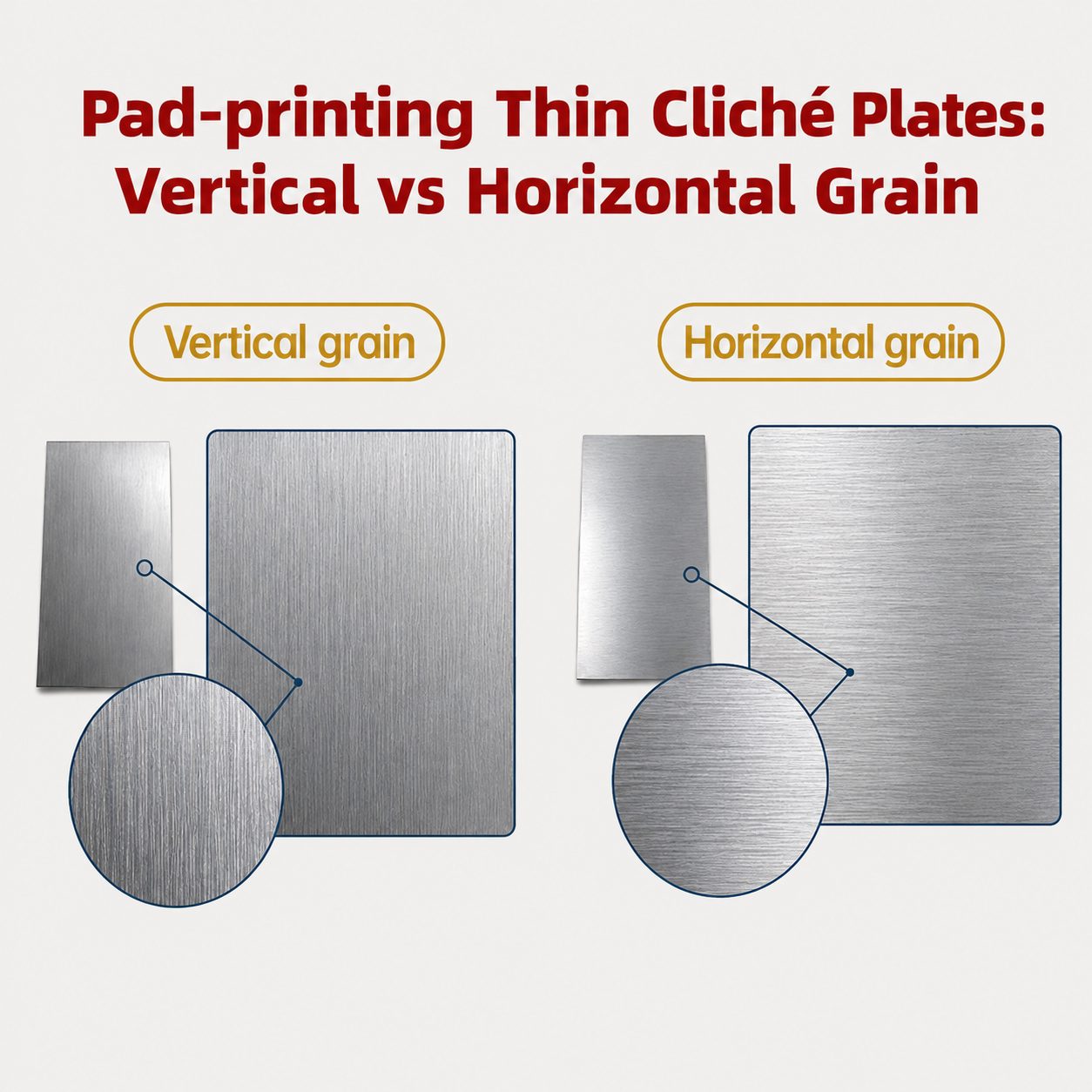
      In pad printing, manufacturers often pay close attention to steel quality, hardness, etching depth and ink formulation. However, there is another small detail that can influence doctoring performance: The grain direction of the cliché plate surface. WINNEO thin cliché plates are manufactured from premium Swedish Sandvik steel. Depending on the application, we provide both standard Vertical Grain plates and customized Horizontal Grain plates. So, what is the actual difference?   1. What Do “Vertical Grain” and “Horizontal Grain” Mean? The terms do not simply refer to how the plate is visually positioned. What really matters is the relationship between the surface grain direction and the doctor-blade or ink-cup travel direction. Vertical Grain: The surface grain runs approximately parallel to the doctoring direction. Horizontal Grain: The surface grain runs approximately perpendicular to the doctoring direction. Although the difference may appear minor, it can influence ink residue during continuous doctoring.     2. Why Can Horizontal Grain Produce Cleaner Doctoring? Even when a cliché plate appears perfectly smooth to the naked eye, its surface still contains very fine microscopic machining lines. These lines can be considered extremely small grooves. When the grain runs parallel to the doctoring direction, some ink can more easily follow these microscopic channels and remain on the plate surface. Depending on the ink viscosity and operating conditions, this may contribute to: •A thin ink film outside the etched image •Slight darkening of the plate after doctoring •Ink streaking •Residual ink lines •Increasing contamination during continuous production With horizontal grain, however, the surface lines run across the doctoring direction. This effectively interrupts the continuous microscopic channels along which ink could otherwise travel. As a result, the doctor blade or ink-cup ring can remove ink from the non-image area more effectively in certain applications. This is why horizontal-grain cliché plates can offer: lower ink residue, cleaner doctoring and more consistent printing performance.     3. Why Is This Particularly Relevant for Closed Ink-Cup Systems? In a closed ink-cup pad-printing system, surface grain influences more than just ink removal. It can also affect the contact condition between the doctor ring and cliché plate. The ceramic or carbide doctor ring needs to maintain stable and continuous contact with the plate. If microscopic surface channels run continuously in the same direction as the ink cup travels, a very small amount of ink may more easily remain within those channels after the ring passes. Horizontal grain interrupts these continuous paths. For this reason, horizontal-grain plates can be particularly useful for applications involving: Larger printing areas Fine or demanding graphics Products sensitive to background ink contamination Low-viscosity inks Continuous production Closed ink-cup systems requiring particularly clean doctoring     4. Why Is Vertical Grain Still the Standard Choice? This does not mean that vertical-grain plates are inferior. In fact, vertical-grain cliché plates perform perfectly well for the vast majority of conventional pad-printing applications. With the correct ink viscosity, a good doctor ring, proper machine adjustment and suitable plate quality, vertical-grain plates can provide highly stable and reliable printing results. This is why WINNEO supplies vertical grain as the standard configuration. Its advantages include: •Broad application compatibility •Mature and stable manufacturing •Suitability for most standard pad-printing jobs •Good cost-performance •Easier stocking and delivery Horizontal grain should therefore be viewed as an application-specific optimization, rather than a replacement for every standard plate.     5. More Visible Grain Does Not Mean Better Doctoring There is another important point: Horizontal grain does not mean that the surface should be rougher. The ideal cliché plate requires: Fine and uniform surface texture Controlled surface roughness Excellent flatness Consistent grain direction Proper compatibility with the doctor ring If the surface texture is excessively rough, even a horizontal grain may contribute to: •Ink trapped inside the surface texture •Faster doctor-ring wear •Ink residue •Unstable doctoring •Printing defects around the image Therefore, cliché-plate performance should never be evaluated solely by asking whether it is horizontal or vertical grain. Steel quality, surface roughness, flatness, etching quality, doctor-ring condition, ink viscosity and machine settings all work together.     6. Which Grain Direction Should You Choose? A practical way to understand the difference is: Vertical Grain — Standard Choice Suitable for the vast majority of conventional pad-printing applications and provides reliable performance under normal operating conditions. Horizontal Grain — Optimized Choice Worth considering when cleaner doctoring is required, or when a customer is experiencing noticeable ink residue or streaking on the plate. However, changing the grain direction alone cannot solve problems caused by poor plate flatness, a worn doctor ring, excessively thin ink or incorrect machine settings. The better approach is to select the cliché plate according to: machine configuration, ink-cup size, image area, ink characteristics and actual doctoring conditions.   WINNEO Recommendation Surface grain may appear to be a small detail, but in pad printing, small details often determine long-term production stability. If you are experiencing: incomplete doctoring, ink residue, streaking, dirty backgrounds or reduced cleanliness during continuous production, in addition to checking the doctor ring, ink viscosity and machine settings, it may also be worth checking: whether the cliché plate grain direction matches your doctoring application. For most standard jobs, vertical grain is sufficient. For applications requiring cleaner doctoring performance, horizontal grain can provide an additional optimization option. The right cliché plate should not only make printing possible — it should help the entire pad-printing system operate more consistently.  
    اقرأ أكثر
  • Automatic Food Tray Labeling Machine: A Practical C-Wrap Solution for Three- and Four-Side Labeling
    Automatic Food Tray Labeling Machine: A Practical C-Wrap Solution for Three- and Four-Side Labeling
    Aug 17, 2026
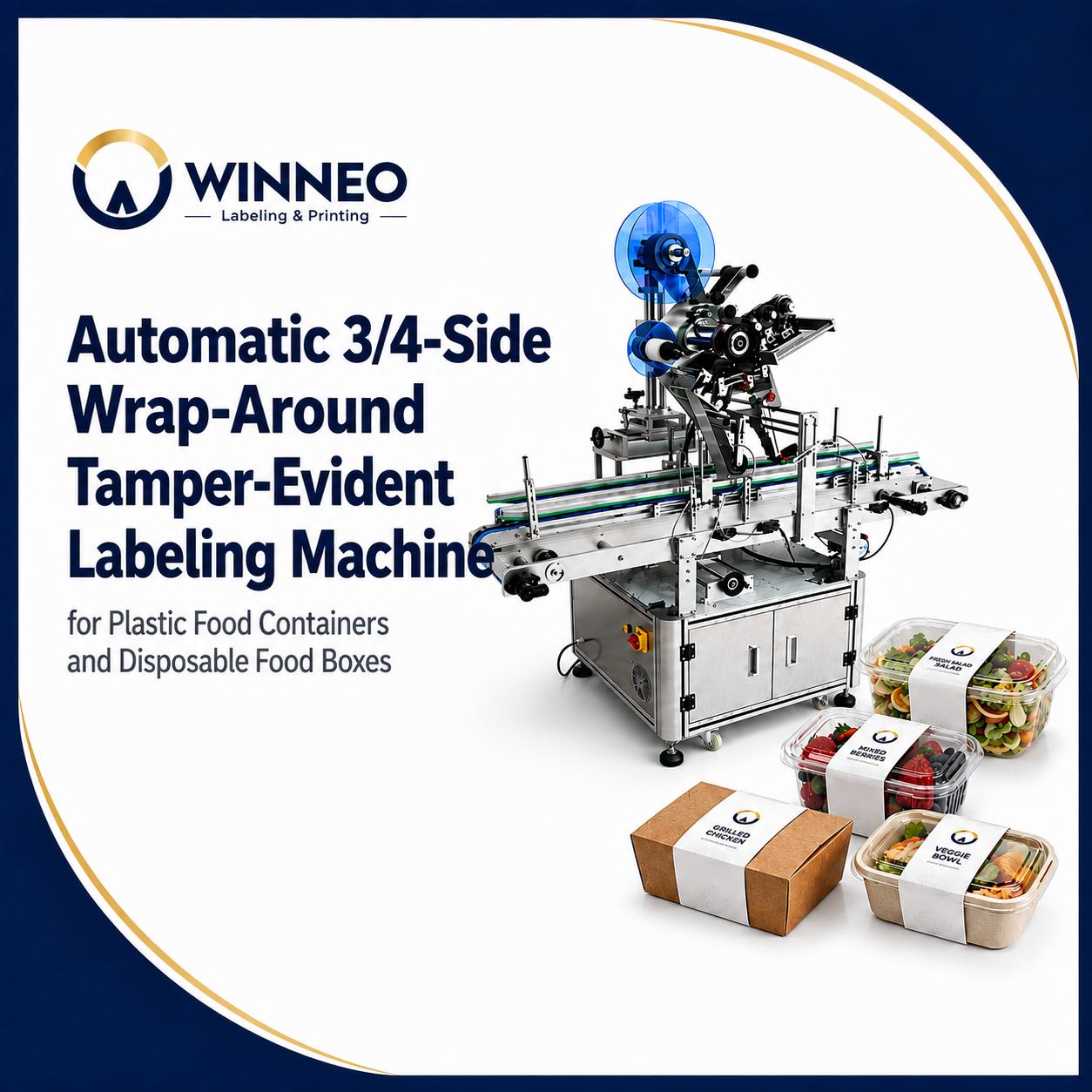
      In fast-growing food categories such as ready meals, fresh produce, salads, and grab-and-go foods, packaging labels must do far more than simply stick to a container. Brand and product information needs to be clearly visible on the top panel, while barcodes, specifications, ingredients, or traceability data must remain readable on the side panels. At the same time, every label must be applied consistently, labeling errors must stay under control, and production speed must keep pace with rising order volumes. Manual labeling and basic flat-surface labelers often struggle to meet all of these requirements at once. Misaligned labels, wrinkles, missed applications, rework, and inconsistent shelf appearance can increase labor costs and weaken customer confidence. For rectangular food trays and clear-lid containers, WINNEO offers an automatic food tray labeling machine that applies one continuous pressure-sensitive label across three sides in a single pass. The same platform can also be customized for four-side wrap labeling. This C-wrap labeling machine combines accurate product positioning, consistent label placement, clear information display, and an added tamper-evident effect—making it a practical upgrade for modern food packaging lines.   Why Are Food Trays Well Suited to C-Wrap Labeling? Food tray packaging has several labeling requirements that are difficult to achieve with separate hand-applied labels: •The top panel must present the brand, product name, and key selling information clearly. •Side panels must carry stable, readable barcodes, specifications, ingredients, or traceability data. •The final package must look consistent across every unit, with less dependence on operator skill. •The labeling process must keep pace with production growth without creating a bottleneck. A conventional process may require several labels and multiple application steps. This increases the risk of inaccurate positioning, wrinkles, missing labels, and inconsistent information placement. By contrast, a C-wrap labeling machine applies a single continuous label in one cycle. The label can cover the top and two opposite sides of the package; a customized four-side configuration can extend the wrap around an additional panel. This approach improves package appearance and creates an additional closure across the lid and tray. For brands that need visible package integrity, the system can also function as a tamper-evident labeling machine while keeping branding, regulatory information, and barcodes on one coordinated label.   Which Products Can This Automatic Food Tray Labeling Machine Handle? The system is particularly suitable for the following food packaging applications: Ready-meal trays Fresh fruit and vegetable containers Salad, deli, sushi, and prepared-food trays Vegetable packaging boxes Disposable food containers Clear-lid clamshell packs for bakery, produce, and grab-and-go foods The best match is a square or rectangular plastic tray with a flat top, a clear lid, and near-vertical side panels. These shapes allow the label to fold smoothly around the package, helping the food tray labeling machine maintain readable information and a clean appearance for retail shelves and e-commerce product images. When the package uses a hinged clear lid, the same configuration may also be described as a clamshell labeling machine. For buyers comparing equipment online, both terms are relevant: “food tray” describes the application, while “clamshell” describes the packaging format.   How the Three- or Four-Side Labeling Process Works 1. Product infeed and spacing: Trays enter the conveyor in a controlled sequence so that each product reaches the labeling station at the correct interval. 2. Product positioning: Guides and holding components stabilize the tray to reduce movement during label application. 3. Label dispensing: The labeling head releases one pressure-sensitive label according to the detected product position. 4. Multi-side wiping and wrapping: The label is pressed onto the top and folded across the selected side panels. The three-sided labeling machine completes the C-wrap in one continuous process; an engineered four-side version can wrap an additional face. 5. Inspection and discharge: The labeled tray leaves the station with branding and required product information presented in a consistent position.   Traditional Labeling vs. WINNEO C-Wrap Labeling Comparison Manual + Basic Flat Labeling WINNEO Automatic C-Wrap Labeling Label use Separate labels for the top and sides One continuous label covers the top and two sides Operation Multiple steps with manual start/stop handling Continuous in-line labeling process Labeling accuracy More operator-dependent variation ±1.0 mm, excluding product and label tolerances Output Lower speed and higher labor cost 15–30 products/min, depending on dimensions Information display Branding and barcode data may be split or incomplete Branding, product data, barcode, and QR code can be coordinated on one label Consistency and rework Higher variation and rework risk Stable positioning helps reduce rework   Core Technical Specifications Parameter Standard Reference Labeling accuracy ±1.0 mm (excluding product and label tolerances) Labeling speed 15–30 products/min (depending on product dimensions) Label roll core diameter 76 mm Maximum label roll outer diameter 280 mm Power supply 220 V Applicable product and label sizes Customized and confirmed for each application Actual specifications are finalized and tested according to the tray dimensions, label material, label layout, and production requirements supplied by the customer.   Frequently Asked Questions 1.What types of food packaging are suitable for C-wrap labeling? The system is best suited to square or rectangular food trays with flat tops and near-vertical side panels. Typical applications include ready-meal trays, fresh produce containers, salads, bakery clamshells, and other clear-lid food packs. 2.What is the difference between a C-wrap labeler and a standard wrap-around labeler? A C-wrap labeler applies one label across three connected faces of a tray, box, or clamshell. In many general web searches, “wrap-around labeler” refers to cylindrical bottles or jars. For rectangular food packs, C-wrap labeling machine or automatic food tray labeling machine is the more accurate product term. 3.Can the machine apply labels to three or four sides? Yes. The standard solution can apply one continuous label across three sides. A four-side configuration can be engineered according to the product shape, label size, folding path, and required information layout. 4.How fast can the machine label products? The standard reference speed is 15–30 products per minute. Actual output depends on tray dimensions, label dimensions, label material, conveyor coordination, and the final configuration. 5.Can WINNEO customize the machine? Yes. WINNEO can configure and test the food packaging labeling machine using the customer’s tray drawings, product samples, label samples, or label artwork. 6.How can I obtain a detailed solution and quotation? Provide the tray dimensions, label sample or drawing, target speed, and photos or video of the existing line. WINNEO can then evaluate compatibility and recommend an appropriate configuration and quotation.   Why Choose a Customized WINNEO C-Wrap Labeling Machine? Founded in 2006, WINNEO is a China-based brand with 20 years of experience in labeling, pad printing, screen printing equipment, and related consumables. We focus on practical machine customization for real products and real production conditions. For food packaging applications, WINNEO supplies three-side and four-side wrap labeling solutions and adjusts each project according to tray dimensions, required output, label material, information layout, and line integration. The goal is not simply to deliver an automatic labeling machine, but to provide a system that can be installed, operated, and maintained reliably in the customer’s production environment. Key advantages include: •Application-specific customization and trial setup based on actual products •Dedicated pre-shipment inspection with test documentation •Complete operation and training videos supplied with the machine •Long-term after-sales and spare-parts support •Competitive cost-performance and controlled lead times •Local distributor support in selected countries Request a Food Tray Labeling Solution If you need food tray labeling equipment that improves brand presentation, keeps product information complete, increases output, and reduces operator-dependent errors, a customized automatic food tray labeling machine is a strong balance of labeling performance and investment cost. Send WINNEO your product drawing, tray dimensions, label sample, target output, or production-line photos. Our team can quickly assess compatibility and recommend a suitable three-side or four-side labeling configuration with a project-specific quotation.  
    اقرأ أكثر
  • About Ceramic Pad Printing Machine FAQs
    About Ceramic Pad Printing Machine FAQs
    Jul 31, 2026
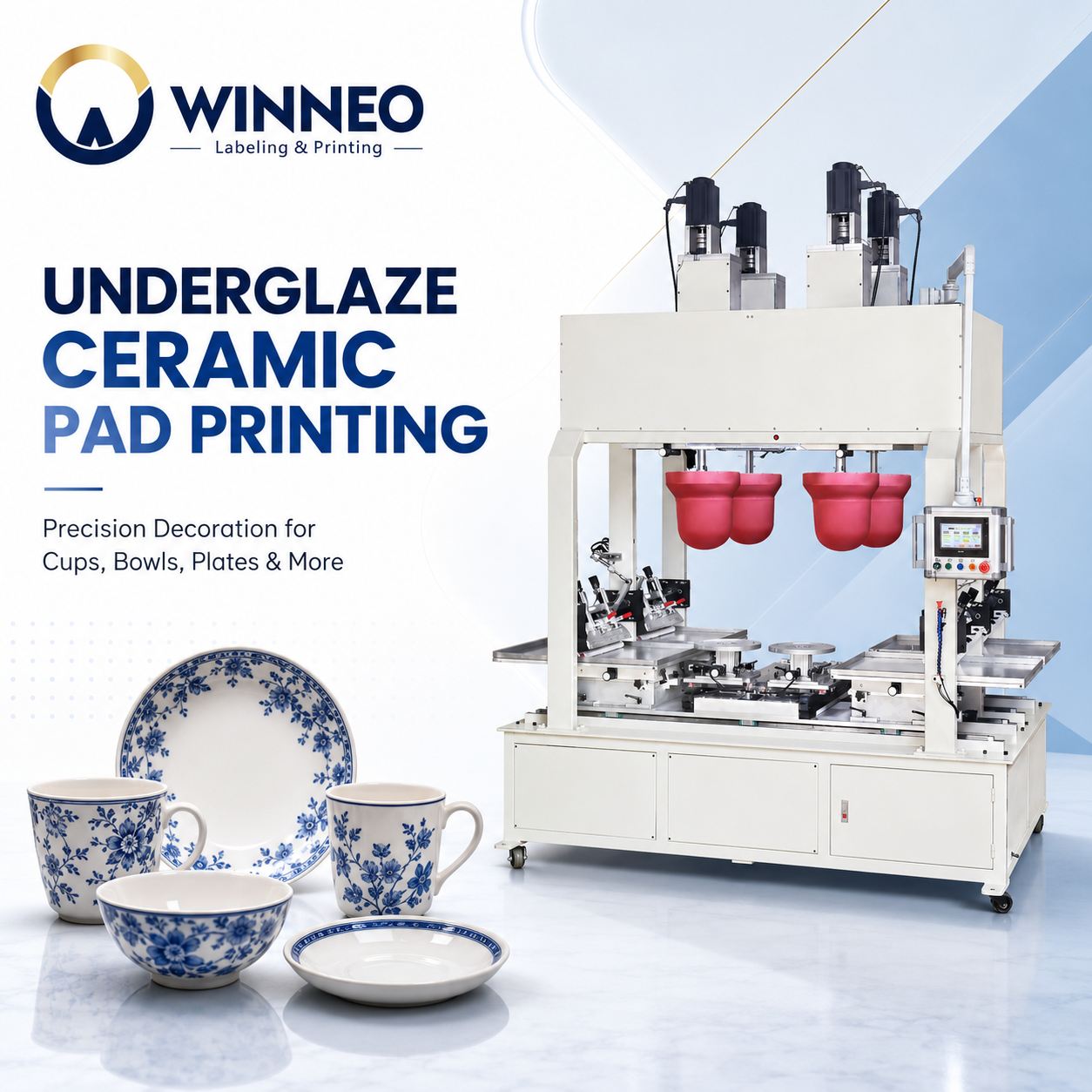
      The ceramic pad printing machine uses underglaze pad printing technology to transfer detailed patterns precisely onto ceramic bodies or beneath the glaze. After glazing and high-temperature firing, the design becomes integrated with the ceramic surface, delivering clear colors, excellent wear resistance and long-lasting print quality for ceramic cups, bowls, plates, saucers and more. About Ceramic Pad Printing Machine FAQs 1. What is a ceramic pad printing machine? A ceramic pad printing machine uses a flexible silicone pad to transfer patterns, logos or text from an engraved printing plate onto ceramic products. It is particularly suitable for curved, recessed and irregular surfaces. 2. What ceramic products can this machine print? WINNEO Automatic Ceramic Dishes/Plates/Bowls Pad Printing Machine can be configured for ceramic bowls, plates, cups, mugs, saucers, tiles, tableware, decorative ceramics and other shaped ceramic products. Custom fixtures and silicone pads may be required for different products. 3. Can it print on curved or irregular ceramic surfaces? Yes. The flexible silicone pad can adapt to curved and irregular surfaces, making pad printing suitable for areas that are difficult to print using conventional flat printing methods. 4. Can the machine print multiple colors? Yes. Multi-color ceramic pad printing machines can print two or more colors. Accurate color registration depends on the machine configuration, fixture precision, product consistency and process settings. 5. Is the ceramic pad printing process automatic? Yes. Depending on production requirements, the system can support automatic product feeding, positioning, printing, color registration and unloading. Semi-automatic configurations are also available for smaller production volumes. 6. What determines the printing speed? Printing speed depends on the number of colors, image size, ceramic product shape, loading method, ink drying requirements and level of automation. Actual output should be confirmed through product sample testing. 7. Is the printed pattern durable and dishwasher-resistant? We adopt under-glaze pad printing technology paired with ceramic-specific inks.The finished ceramic products are food-grade and safe for daily catering use, featuring excellent resistance to abrasion and chemicals, and are dishwasher-safe.To better meet customers’ practical demands, we still need to conduct verification tests tailored to each client’s actual application scenarios. 8. Does each ceramic product require a custom fixture? In most cases, yes. A suitable fixture keeps the product stable and accurately positioned during printing. Products with different sizes or shapes may require interchangeable or customized fixtures. 9. Can one machine print different ceramic products? Yes. The machine may be adapted to different products by changing the fixture, silicone pad, printing plate and process settings. The printable size and shape must remain within the machine’s working range. 10. What consumables are required? Common consumables include silicone printing pads, printing plates, ceramic-compatible inks, thinners, hardeners and cleaning materials. The exact consumables depend on the printing process and ceramic surface. About WINNEO Specialized in pad printing, screen printing and labeling solutions, we keep innovating to support manufacturers globally. We are dedicated to enhancing your printing processes by providing labeling equipment, pad and screen printing equipment, and related consumables. We work closely with you to deliver targeted solutions—making your print quality our mission and your success our future. WINNEO Specialist in Customized Labeling Machines & Screen Printing ,Pad Printing.
    اقرأ أكثر
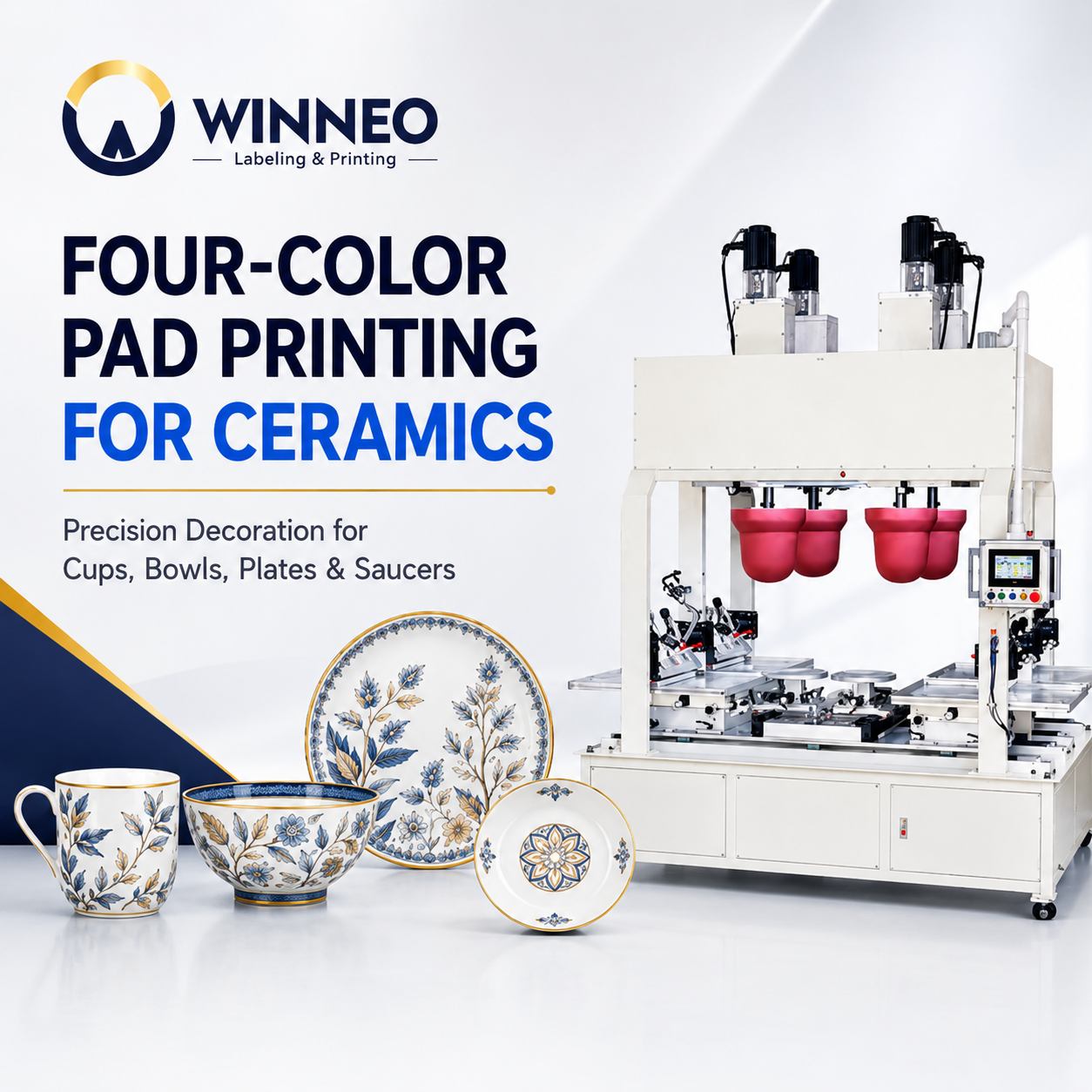
  • How Pad Printing is Revolutionizing Underglaze Ceramic Production? A Complete Guide to the WINNEO 4-Color Ceramic Pad Printing Machine
    How Pad Printing is Revolutionizing Underglaze Ceramic Production? A Complete Guide to the WINNEO 4-Color Ceramic Pad Printing Machine
    Jul 21, 2026
    In the highly competitive ceramic manufacturing industry, the efficiency and quality of decoration processes directly determine a company's profit margins. Attention ceramic manufacturers! Are you still struggling with the following production pain points? ◆ Hand-painting processes are highly costly and inefficient, making it hard to meet large-volume orders. ◆ Traditional screen printing fails to handle complex curved surfaces and irregular shapes perfectly. ◆ Multi-color pattern printing suffers from unstable quality and misalignment, leading to a high rejection rate. If these issues resonate with you, then automated ceramic pad printing technology is the key to breaking through the bottleneck. Today, we will dive deep into how the WINNEO 4-color ceramic pad printing machine is bringing industry-level innovation to underglaze ceramic printing. 1. The Limitations of Traditional Ceramic Decoration For a long time, ceramic surface treatment has relied on manual painting or traditional screen printing. However, as the market demands more personalized and complex patterns, the drawbacks of traditional methods are becoming increasingly obvious: labor costs are rising year by year, and screen printing often falls short when it comes to curved surface ceramic printing. The precision of multi-color overprinting is also hard to guarantee. The industry urgently needs an automated ceramic printing equipment that combines high efficiency, high precision, and high flexibility. 2. The Game Changer: WINNEO 4-Color Ceramic Pad Printing Machine As an industry-leading solution, the WINNEO 4-color ceramic pad printer perfectly balances the triangle of "Efficiency × Quality × Cost Advantage." High Efficiency: With a printing speed of up to 5 products per minute (360 pieces/hour), it easily handles large-scale production. Ultra-Wide Format: Supports an ultra-wide printing range from 50mm to 400mm, meeting diverse needs from mini cups to large dinner plates. 3. Three Core Technical Advantages to Reshape Production Efficiency Advantage 1: Precision Servo Control System for Ultimate Clarity Equipped with advanced servo motors and linear guide rail systems. Compared to traditional pneumatic devices, it not only runs faster and positions more accurately but also operates with extremely low noise. Most importantly, it ensures uniform ink distribution without shifting, bringing the pattern clarity of underglaze ceramic printing to an unprecedented level. Advantage 2: Ultimate Surface Adaptability, Breaking Shape Limits Whether it's flat, curved, or irregular surfaces, the WINNEO pad printing machine can handle it with ease. By customizing silicone pads of various sizes and shapes, it comprehensively covers common categories such as ceramic cups, bowls, plates, and dishes, and can even print perfectly on both inner and outer surfaces, truly solving the industry challenge of curved surface ceramic printing. Advantage 3: Exceptional Cost Control to Boost Profit Margins When it comes to reducing ceramic production costs, the WINNEO 4-color ceramic pad printing machine performs exceptionally well. Its unique pad printing process ensures that the consumption of pigments and inks is far lower than that of screen printing and hand painting. Combined with its high capacity of 360 pieces/hour, it significantly reduces the labor and material costs per unit. 4. WINNEO Ceramic Underglaze Pad Printing Machine: Model Comparison & Selection Different product lines require the most suitable equipment. Please check the model comparison table above to understand the specific parameters and application scenarios of each model. Model Printing Speed Max. Printing Area Suitable Applications WP-CEREMIC-1 600-800 pcs/hour 420 x 420 mm Fast Single-Color Production WP-CEREMIC-2 600 pcs/hour 500 x 500 mm Fine Two-Color Patterns WP-CEREMIC-3 600 pcs/hour 320 x 320 mm Precision Three-Color Printing WP-CEREMIC-4 360 pcs/hour 400 x 400 mm Complex Four-Color Patterns Conclusion & Call to Action From manual to automated, from flat to complex curved surfaces, the WINNEO pad printing machine is redefining the standards of underglaze ceramic printing. If you want to increase capacity, reduce the rejection rate, and significantly cut production costs, now is the best time to upgrade your equipment. Click here to get a free quote Contact our technical experts to customize an exclusive ceramic printing solution for you! About WINNEO Specialized in pad printing, screen printing and labeling solutions, we keep innovating to support manufacturers globally. We are dedicated to enhancing your printing processes by providing labeling equipment, pad and screen printing equipment, and related consumables. We work closely with you to deliver targeted solutions—making your print quality our mission and your success our future. WINNEO Specialist in Customized Labeling Machines & Screen Printing ,Pad Printing.
    اقرأ أكثر
  • ¡Campeones! Spain Wins the 2026 World Cup — WINNEO Celebrates with Our Spanish Partners!
    ¡Campeones! Spain Wins the 2026 World Cup — WINNEO Celebrates with Our Spanish Partners!
    Jul 20, 2026
              Historic Victory · July 19, 2026 Congratulations, Spain! Spain Is the 2026 FIFA World Cup Champion A celebration of championship spirit, shared values and the global partnerships that continue to inspire WINNEO. 🏆 World Champions A Night of Football History The final whistle has blown, and the world witnessed history — Spain is the 2026 FIFA World Cup Champion! In a breathtaking final on July 19th, La Roja defeated Argentina 1-0 in extra time, with Ferran Torres delivering the decisive blow in the 106th minute. After 16 years, the trophy returns to Spain — and the celebrations are well deserved. Final Result Spain 1–0 Argentina Extra time · Winning goal in the 106th minute 🤝 A Message to Our Partners Here at WINNEO, we are proud to work alongside clients and partners across Spain and the broader Spanish-speaking world. Your passion, precision, and dedication inspire us every day — much like the Spanish national team's relentless spirit on the pitch.   A Champion’s Formula We Share Just like Spain's winning formula — discipline, teamwork, and precision — these are the same values we bring to every labeling and printing solution we deliver. 01 · Discipline Consistent Standards A disciplined approach to every stage of equipment design, production and service. 02 · Teamwork Global Cooperation Close collaboration with clients and partners to create suitable production solutions. 03 · Precision Reliable Performance Accurate labeling and printing solutions designed for stable industrial production. WINNEO Solutions Helping Your Production Line Perform Like a Champion Whether it's high-speed labeling machines, pad printing systems, or custom consumables, WINNEO is committed to helping your production line perform like a champion. High-Speed Labeling Machines Pad Printing Systems Custom Consumables   🏆 Congratulations to Spain and All Our Spanish-Speaking Partners Worldwide! From all of us at WINNEO — ¡Vamos España!
    اقرأ أكثر
  • حل مشكلة وضع الملصقات على الأغطية المركزية: كيف تُحسّن آلة وضع الملصقات الأوتوماتيكية ذات التثبيت جودة الإنتاج
    حل مشكلة وضع الملصقات على الأغطية المركزية: كيف تُحسّن آلة وضع الملصقات الأوتوماتيكية ذات التثبيت جودة الإنتاج
    Jul 12, 2026
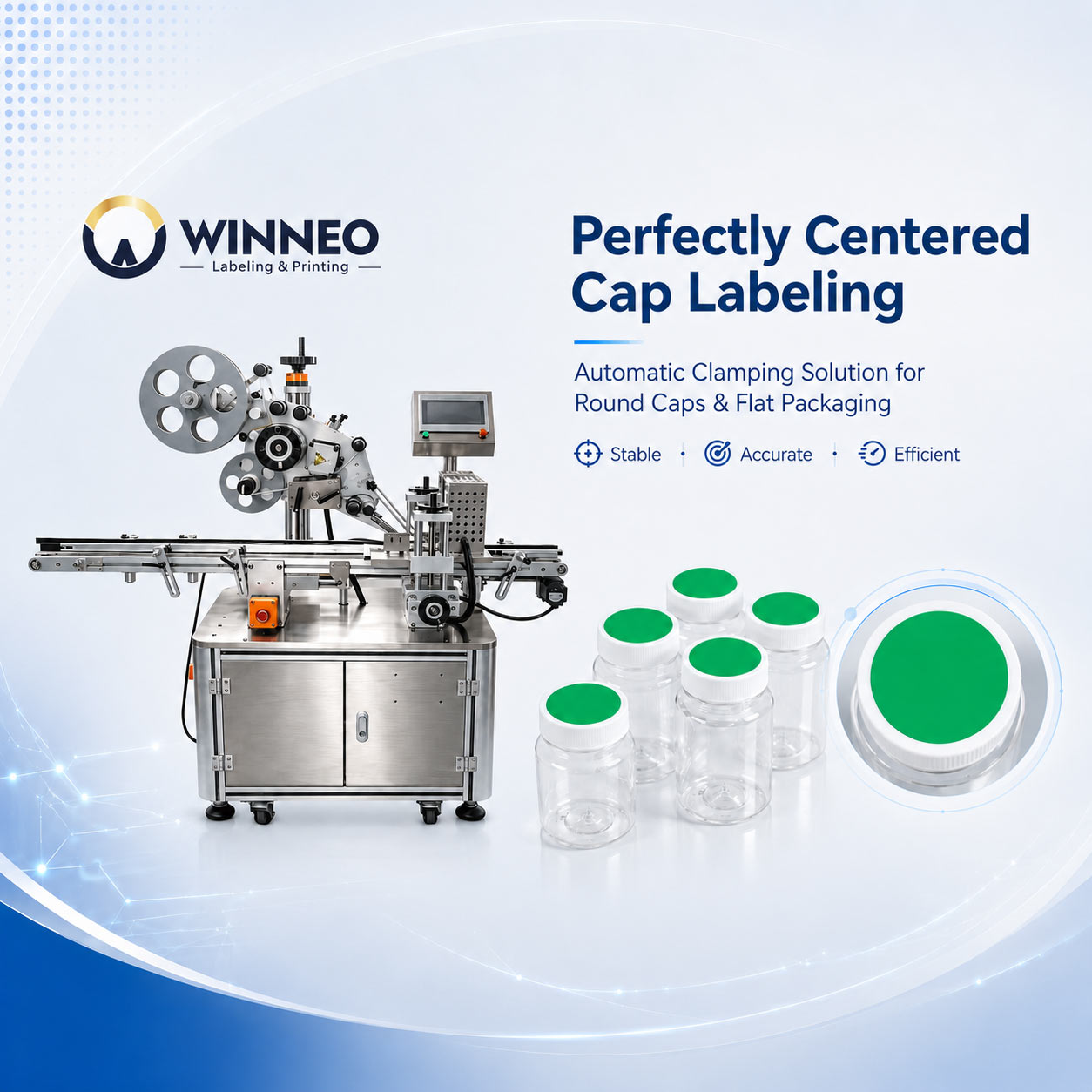
     حل مشكلة وضع الملصقات على الأغطية المركزية: كيف تُحسّن آلة وضع الملصقات الأوتوماتيكية ذات التثبيت جودة الإنتاجفي العديد من الصناعات، يعتبر وضع العلامات على سطح مستو أمراً بسيطاً نسبياً.لكن عندما يتعلق الأمر بـ أغطية زجاجات مستديرة، ويصبح تحقيق وضع ملصق مركزي تمامًا بسرعة عالية تحديًا حقيقيًا.أي انحراف بسيط يكون واضحاً للغاية على الأسطح الدائرية. حتى أدنى انحراف يمكن أن يؤثر على المظهر العام للعبوة، ويقلل من جودة المنتج المتصورة، ويزيد من تكاليف إعادة التصنيع. هذا هو التحدي الذي واجهه عميلنا بالضبط.التحدي: وضع ملصقات مركزية عالية السرعة على أغطية دائريةبالنسبة لمنتجات مثل:• زجاجات الطعام والمشروبات• مرطبانات العسل• عبوات الصلصة• عبوات مستحضرات التجميل• زجاجات الرعاية الصحيةغالباً ما يطلب العملاء وضع الملصق بدقة في منتصف الغطاء.لكن، أثناء عملية وضع الملصقات:•يمكن للمنتجات الدائرية أن تدور أو تتحرك بسهولة أثناء النقل•يؤدي تحديد الموضع يدويًا إلى نتائج غير متسقة•تواجه آلات وضع الملصقات المسطحة التقليدية صعوبة في تحديد موضع الغطاء بدقة عاليةوالنتيجة؟❌ وضعية وضع الملصقات غير مستقرة❌ زيادة معدل العيوب❌ جهد إضافي لإعادة وضع الملصقات❌ ارتفاع تكاليف الإنتاجالحل: تقنية التثبيت والتحديد التلقائي للموضعلحل هذه المشكلة، قمنا بتطوير آلة وضع الملصقات الأوتوماتيكية ذات التثبيت المسطح مزودة بآلية تثبيت مخصصة.يعمل نظام التثبيت كدليل لتحديد الموضع:✅ يحافظ على استقرار المنتج أثناء النقل✅ يمنع حركة الزجاجة أثناء وضع الملصقات✅ يضمن تحديد الموقع المركزي بدقة✅ يحسن الاتساق في الإنتاج الضخممن خلال الجمع بين أنظمة التحكم الدقيقة والتحديد الميكانيكي للمواقع، تحقق الآلة أداءً مستقرًا وقابلًا للتكرار في وضع الملصقات.التكوين التقنيولضمان التشغيل الموثوق، تدمج الآلة مكونات صناعية عالية الجودة:⚙ نظام التحكمشركة باناسونيك بي إل سي⚙ مستشعر كشف المنتجمستشعر باناسونيك SUNX + نظام استشعار دقيق⚙ نظام الجر والقيادةنظام محرك متدرج ليدشاين⚙ نظام التثبيت والقيادةنظام محرك متدرج ليدشاينتحسين الأداءبعد الترقية إلى حل التثبيت والترقيم التلقائي:دقة وضع العلامات±1 ممسرعة وضع الملصقات40-80 قطعة/دقيقةجودة المنتجاتمعدل إنتاجية عالي مع اتساق ثابت في عملية وضع العلاماتعمليةسهولة التعديل والإعداد المريحمرونة التطبيقبعد التعديل، يمكن للآلة التعامل مع منتجات مختلفة ضمن نطاق الحجم المناسب، بما في ذلك:• زجاجات مستديرة• المنتجات المسطحة• صناديق• حاوياتتطور تكنولوجيا وضع العلامات1.0 آلة وضع الملصقات شبه الأوتوماتيكية عالية الدقة (WT101)2.0 آلة وضع الملصقات المسطحة الأوتوماتيكية بالكامل (WT303)3.0 آلة وضع الملصقات الأوتوماتيكية ذات التثبيت المسطح✔ دقة عالية (تصل إلى ±0.2 مم)✘ يتطلب التحميل اليدوي✘ كفاءة إنتاج محدودة✘ السرعة: 15-25 قطعة/دقيقة✔ سرعة إنتاج أسرع✔ مناسب لمعظم المنتجات المسطحة✘ لا يزال من غير الممكن حل مشكلة وضع ملصقات الأغطية المركزية بدقة عالية بشكل كامل✔ إمكانية وضع الملصقات على الغطاء من المنتصف✔ إنتاج عالي السرعة✔ جودة إخراج ثابتة✔ تعديل بسيطيُتيح هيكل التثبيت إمكانية جديدة:دقة عالية + كفاءة عالية + مرونة عاليةنتائج أعمال للعملاءأدى هذا التحديث إلى تحسينات ملموسة:مظهر أفضل للمنتجتساهم الملصقات المتمركزة بشكل مثالي في تحسين جودة التغليف وتجعل المنتجات تبدو أكثر تميزاً على الرفوف.انخفاض تكلفة العمالةمن خلال القضاء على التصحيح اليدوي المتكرر:من 2-3 عوامل تشغيل → عامل تشغيل واحدتقليل نفايات الملصقاتانخفض استهلاك الملصقات بنسبة تقريبية 20%تحسين جودة الإنتاجمعدل العيوب في وضع الملصقات:قبل: 15-20%بعد التحديث: 0%خاتمةبالنسبة للمصنعين الذين يحتاجون إلى وضع ملصقات متسقة وعالية الجودة على الأغطية المستديرة والتغليف المسطح، فإن تحديد المواقع بدقة هو المفتاح.توفر آلة التثبيت واللصق الأوتوماتيكية حلاً عملياً من خلال الجمع بين:✔ وضع المنتج بشكل ثابت✔ تحكم دقيق في وضع العلامات✔ أتمتة عالية السرعة✔ إمكانية تطبيق مرنةيمكن لتحسين ميكانيكي بسيط - آلية التثبيت - أن يُحدث نقلة نوعية في كفاءة الإنتاج وجودة المنتج.هل تحتاج إلى حلول لوضع ملصقات على الأغطية في المنتصف؟أرسل إلينا قطر غطاء العبوة، وأبعاد المنتج، وحجم الملصق، والسرعة المطلوبة، وصورًا للعينات. سيقوم مهندسونا بتقييم التطبيق واقتراح تصميم مناسب للملصقات. تواصل مع WINNEO عبر واتساب تواصل مع WINNEO عن طريق ملء النموذج
    اقرأ أكثر
  • Why is D2 thick cliché plate the preferred choice for acidic substrates? The secret behind a one-million-impression lifespan.
    Why is D2 thick cliché plate the preferred choice for acidic substrates? The secret behind a one-million-impression lifespan.
    Jun 24, 2026
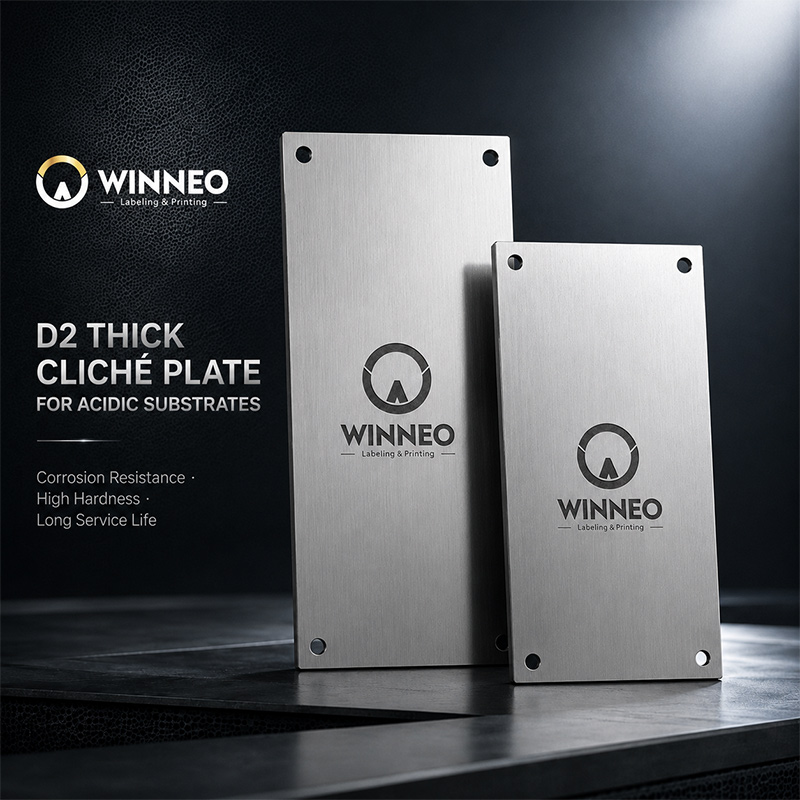
    Have you encountered issues such as premature corrosion of steel pad-printing plates or a decline in print quality? This may be due to excessive acidity in the substrate or the failure to select rust-resistant chromium steel for the plates.   An acidic environment accelerates the oxidation and corrosion of the steel plate, leading to: 1. Blurred edges of the printed pattern 2. Pitting on the steel plate surface 3. Significantly reduced printing lifespan   Three Key Advantages of the D2 Thick Cliché Plate: I. Exceptional Corrosion Resistance Its high chromium content (approximately 12%) provides excellent rust resistance, earning it the designation "semi-stainless steel."   II. Ultra-High Hardness and Wear Resistance ●Hardness reaches HRC 63 ± 1 after heat treatment. ●Scratch resistance withstands 600,000 to 1,000,000 cycles (7–10 times that of thick cliché plate 【Z01】) service life of standard Z01 thick cliché plate. III. Long-term Cost-Benefit Analysis Although WINNEO (D2) thick cliché plates require a higher initial investment, their service life is 5 to 10 times longer; this reduces the frequency of downtime for replacements and ensures consistent print quality, thereby lowering overall production costs. Furthermore, thanks to heat treatment, WINNEO’s high-quality chrome (D2) thick cliché plates can be reground and refurbished more than five times while maintaining performance comparable to that of a new plate.   IV. WINNEO Pad Printing Steel Plates–(D2) thick cliché plates Application Scenarios ●Electronic products (plastic parts with acidic coatings) ●Medical devices (requiring chemical corrosion resistance) ●Automotive components (exposed to corrosive environments)●Cosmetic packaging (containing alcohol and acidic ingredients) Our Commitment WINNEO will continue to provide customers with reliable machinery and equipment, high-quality services, and ample consumable supply solutions to ensure the normal operation of equipment and promote business growth.   We are not just your product supplier, but also your partner: Before sales, we actively work with you to determine product solutions; during sales, we improve and adjust products according to specific needs, and send product videos so you can witness the product in operation or be shipped firsthand. After sales, we can provide local or remote training and guidance for any related issues.   As a professional provider of pad screen printing and labeling products and services, WINNEO will provide solutions and continuous innovation for factories and users worldwide.
    اقرأ أكثر
  • WINNEO Latest Trends in Apparel Labeling Technology — Label-Free Pad Printing
    WINNEO Latest Trends in Apparel Labeling Technology — Label-Free Pad Printing
    Jun 05, 2026
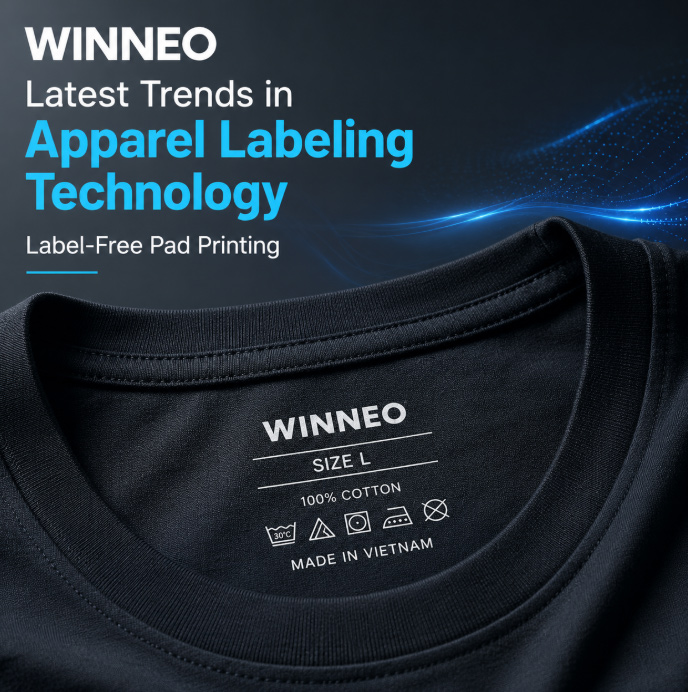
    Label-free pad printing is a more cost-effective and flexible alternative to heat transfer printing and sewn labels.    Traditional garment factories still rely on screen printing or heat transfer printing for labeling. Screen printing has obvious limitations: it requires the fabric to be completely flat. However, finished garments feature curved necklines, uneven side seams and soft materials. When screen printing is forced onto these irregular surfaces, the screen stencil cannot fit closely against the fabric, resulting in incomplete patterns, ghosting, and even damage to the garments.   Heat transfer labels, by contrast, come with higher costs and longer production lead times, plus poor durability. Since heat transfer films are merely attached to the fabric surface, the labels tend to crack and deform after repeated bending, stretching or washing.     What’s more, heat transfer labeling requires at least two pieces of equipment: a printer and a heat press. Both devices increase energy consumption and generate large amounts of waste. The backing paper of heat transfer films is discarded after application, creating extra waste and bringing adverse impacts on environmental protection.     Advantages of Pad Printing   1.Excellent conformability Equipped with soft silicone pads that work just like stamps, the pads can flex freely and fit perfectly onto uneven surfaces. It can print labels directly on curved necklines, cuffs and wrinkled areas. This technology is applicable to all types of apparel, ranging from underwear to outerwear.   2.Superior durability The printing ink penetrates deep into the fabric and becomes an integral part of the garment. The pad printed labels can withstand numerous washes without cracking or peeling off.   3.High efficiency   Compared with other labeling methods, pad printing features instant drying. No heat bonding or additional dryers are required. This outstanding advantage is not only a major plus for apparel labeling manufacturers, but also an indispensable tool to help them expand their market share.       Advantages of Label-Free Pad Printing over Sewn Labels, Heat Transfer Labels and Screen Printed Labels         Components of WINNEO Fully Electric Tagless Printing Machine (Fabric Label Printing Machine)   1. WINNEO Tagless Printing Machine  This standalone label-tagless pad printing machine is specially developed by WINNEO for label printing on garments and fabrics: Fully electric design Low operating noise. No additional air compressor is required. The positioning accuracy reaches up to ±0.02mm. Fabric holding fixture Equipped with adhesive mats to fix fabrics firmly without causing damage. Built-in laser positioning cursor also makes alignment much easier. Shuttle-type silicone pads The pads move back and forth automatically for color printing. Frequent adjustment is not needed, so the machine is easy to operate. Even new operators can handle printing work effortlessly.     2. Pad Printing Plates (Clichés) We supply a full range of plate materials for printing applications, including:Compatible with Z01 thick plates, Z02 thick plates, D2 thick plates, ZT thick plates , carbon steel plates, stainless steel plates,aluminum plates,ceramic plates, etc.     3. Silicone Pads Garments vary in print pattern size and require pads with different hardness and softness. Besides standard silicone pads, WINNEO also provides customized pads to meet diverse demands.With 20 years of experience in the pad printing industry, we have built a comprehensive silicone pad database. Our professional team is ready to offer technical support and recommendations to help you select the most suitable pads.     4. Ink Cups & Rings Spare ink cups and blade rings are provided to improve ink changing efficiency.Our ink cups are compatible with equipment of other brands and available at competitive prices. We can also recommend matched blade rings according to your production capacity, helping you achieve optimal printing results within your budget.     5. Printing Inks Apparel pad printing inks need not only good printability, but also meet the following requirements: 1、Non-irritating to skin for comfortable wear; 2、Excellent wash and abrasion resistance: no color fading after repeated washing and long-term use; 3、Resistant to cracking when stretched.   Garment materials cover cotton, polyester, nylon, spandex, PU leather and various blended fabrics, all with distinct surface properties. Therefore, our inks are specially formulated to match different fabrics: 1、Good penetration and adhesion on natural fibers; 2、Strong surface bonding performance on chemical fibers; 3、Reliable stable adhesion on elastic materials.
    اقرأ أكثر
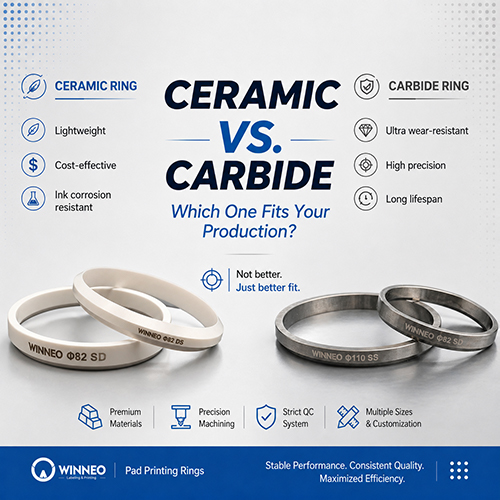
  • 【Ceramic vs Carbide 】Ink Cup Rings — Which One Should You Choose?
    【Ceramic vs Carbide 】Ink Cup Rings — Which One Should You Choose?
    May 22, 2026
    “Ceramic or carbide?” This is where most buyers get stuck. But the truth is: It’s not about which is better   It’s about which fits your pad printing machine and specific ink cups setup.     Quick Comparison Both materials serve different roles in modern pad printing ink cup systems. The choice directly impacts ink transfer quality, seal longevity, and line throughput.         How to Choose (Based on Your Application) ✅ Go for Ceramic Rings if you: l Run small batches / multiple SKUs l Use corrosive inks in your pad printing ink cup l Need a cost-effective & flexible solution l Prefer lighter equipment load on your press     ✅ Go for Carbide Rings if you: l Run high-volume, continuous production l Require high precision & consistency across every ink cups cycle l Operate in high-temperature environments l Want to minimize downtime & maintenance for your pad printing machine What Actually Matters Choosing the right ring is really about optimizing your:   ✔ Production stability ✔ Maintenance frequency ✔ Downtime ✔ Overall efficiencyNot just the material. About WINNEO Pad Printing Rings In real production, consistency is everything:   lPremium raw materials + heat treatment → durability & corrosion resistance lCNC precision machining → tight tolerances & tight tolerances & stability for any pad printing ink cup l100% inspection + simulation testing → reliable performance lMultiple sizes & customization → tight tolerances & stability for any pad printing ink cup     Bottom line: The best ring isn’t ceramic or carbide — it’s the one engineered for your pad printing machine workflow. If you're evaluating ink cup rings for your line,If you're evaluating ink cups or upgrading your pad printing ink cup components for your line Feel free to share your application — happy to exchange insights.
    اقرأ أكثر
  • كيف تعمل آلات وضع الملصقات على الأكياس البلاستيكية والزجاجات؟
    كيف تعمل آلات وضع الملصقات على الأكياس البلاستيكية والزجاجات؟
    Jan 13, 2026
    في مجال التصنيع والتغليف الحديث، يُعدّ المظهر الجذاب للمنتج بنفس أهمية جودته. فسواءً أكانت زجاجة أنيقة تحتوي على مشروب فاخر، أو كيسًا بلاستيكيًا مرنًا يحوي وجبات خفيفة عضوية، فإنّ الملصق يُمثّل حلقة الوصل الأساسية بين العلامة التجارية والمستهلك. مع ذلك، فإنّ تطبيق هذه الملصقات بدقة وسرعة واتساق يُعدّ إنجازًا هندسيًا معقدًا. إن فهم كيفية تكيف آلات وضع الملصقات مع المواد المختلفة - وتحديداً الأسطح الأسطوانية الصلبة للزجاجات والأسطح المرنة وغير المستوية في كثير من الأحيان للأكياس البلاستيكية - يكشف عن التنوع المذهل لتكنولوجيا التعبئة والتغليف.  أساسيات تكنولوجيا وضع العلامات في جوهرها، يجب أن تُنسق أي منظومة وضع ملصقات ثلاث حركات أساسية: سرعة ناقل المنتج، وسرعة توزيع الملصق، وضغط التطبيق. وبينما يظل المنطق الأساسي ثابتًا، تختلف تكوينات الأجهزة اختلافًا كبيرًا بناءً على شكل الحاوية. بالنسبة للمنتجين على نطاق صغير أو العلامات التجارية المتخصصة، أ آلة وضع الملصقات المكتبيةتوفر هذه الوحدات المدمجة توازناً مثالياً بين المساحة والكفاءة، حيث صُممت للتعامل مع مختلف أنواع الحاويات، مما يسمح للشركات بالانتقال من الطرق اليدوية التقليدية إلى الدقة الآلية دون الحاجة إلى مساحات صناعية ضخمة. تشريح جهاز وضع الملصقات الآلي تتكون كل آلة وضع الملصقات بشكل عام من:حامل فك اللفائف: يحمل لفة الملصقات الحساسة للضغط.لوحة التقشير: حافة حادة تجبر الملصق على الانفصال عن ورق الدعم الخاص به (البطانة).محرك الدفع: يتحكم في توقيت توزيع الملصقات.أداة التطبيق: المكون (الأسطوانة أو الفرشاة أو المكنسة الكهربائية) الذي يثبت الملصق على المنتج.  الدقة على المنحنيات: وضع الملصقات على الزجاجات تُشكّل الزجاجات الزجاجية تحدياً فريداً نظراً لصلابتها ووزنها. معظم الزجاجات الزجاجية أسطوانية الشكل، مما يتطلب استخدام تقنية "اللفّ" لضمان توسيط الملصق وخلوه من الفقاعات.طريقة الالتفاف عندما تتحرك زجاجة زجاجية على خط الإنتاج، يتم عادةً ضبط المسافة بينها وبين رأس وضع الملصقات بواسطة برغي توقيت أو عجلة فاصلة لضمان وصولها إلى رأس وضع الملصقات في اللحظة المناسبة تمامًا. أما بالنسبة للعبوات المستديرة، آلة وضع الملصقات على الزجاجات المستديرةتستخدم "محطة لف" متخصصة. عندما تصل الزجاجة إلى أداة التطبيق، تُثبّت الحافة الأمامية للملصق على الزجاج. في الوقت نفسه، يقوم حزام آلي أو مجموعة من البكرات بتدوير الزجاجة في مكانها. تسحب هذه الحركة الدورانية باقي الملصق على السطح، مما يضمن تطبيقًا سلسًا بزاوية 360 درجة أو وضعًا متناسقًا تمامًا من الأمام والخلف. التغلب على عيوب الزجاج على الرغم من صلابة الزجاج، إلا أنه ليس مثاليًا دائمًا. فالاختلافات الطفيفة في قطر الزجاجة (المعروفة باسم "التناقص التدريجي") قد تتسبب في التفاف الملصقات أو ميلها. تعالج آلات وضع الملصقات المتطورة على الزجاجات الدائرية هذه المشكلة من خلال السماح لرأس وضع الملصقات بالإمالة قليلًا، بما يتناسب مع الشكل المحدد للزجاجة. هذا المستوى من الدقة هو ما يجعل الأنظمة الآلية تتفوق بشكل كبير على العمل اليدوي في صناعات المشروبات والأدوية ذات الإنتاج الضخم.  الاستقرار على المرونة: وضع العلامات على الأكياس البلاستيكية وضع الملصقات على الأكياس البلاستيكية أو العبوات الصغيرة فنٌّ مختلف تمامًا. على عكس الزجاج، تتميز الأكياس البلاستيكية بمرونتها وخفتها، كما أنها عرضة للتجعد. إذا حاولتَ وضع ملصق على كيس وهو ممتلئ بالمنتج، فإن السطح غير المستوي غالبًا ما يؤدي إلى انحباس الهواء وظهور الملصقات بشكل غير مستقيم. نهج "السطح أولاً"للحصول على مظهر احترافي، تُوضع الملصقات على الأكياس البلاستيكية عادةً وهي فارغة ومسطحة. هذا يضمن أن يكون سطحها أملسًا كسطح ورقة. ولمعالجة هذه المشكلة، يستخدم المصنّعون... آلة وضع الملصقات المسطحة للأكياسمزودة بوحدة تغذية احتكاكية أوتوماتيكية. تتم العملية على النحو التالي: 1. التغذية: يتم وضع مجموعة من الأكياس الفارغة في وحدة التغذية. تقوم عجلة احتكاك عالية السرعة "بفصل" الكيس السفلي من المجموعة وقذفه على سير ناقل يعمل بالشفط.2. التثبيت: يقوم حزام الشفط بسحب الكيس لأسفل بشكل مسطح، مما يمنعه من التحرك أو التذبذب أثناء تحركه نحو رأس وضع الملصقات.3. طريقة الاستخدام: يتم إخراج الملصق من الأعلى. ولأن الكيس مسطح ومدعوم بواسطة سير ناقل، يمكن للآلة تطبيق ضغط كبير عبر بكرة مطاطية لضمان التصاق المادة اللاصقة بالبلاستيك فورًا.  الاختلافات الرئيسية في مناولة المواد ميزةوضع ملصقات على الزجاجاتوضع ملصقات على الأكياس البلاستيكيةالحالة الماديةصلب وثقيلمرن وخفيف الوزنمشكلة مشتركةالفقاعات والانحرافالتجعد والكهرباء الساكنةالتعامل مع المنتجيتم تحديد المسافة بينها بواسطة براغي التوقيتيتم تغذيتها بواسطة مغذيات الاحتكاكنمط التطبيقلوحة جانبية أو لوحة محيطةتطبيق مسطح من الأعلى إلى الأسفل  دور المواد اللاصقة تحدد المادة أيضًا نوع المادة اللاصقة المستخدمة. فالزجاج غير مسامي، وقد يكون باردًا أو رطبًا (خاصةً في تعبئة المشروبات)، مما يتطلب مواد لاصقة مقاومة للرطوبة. أما الأكياس البلاستيكية، المصنوعة غالبًا من البولي إيثيلين أو البولي بروبيلين، فلها "طاقة سطحية منخفضة"، مما يعني أن الملصقات تحتاج إلى مادة لاصقة عالية الالتصاق لمنع الحواف من التقشر بمرور الوقت (وهي ظاهرة تُعرف باسم "التقشر").  لماذا تُعدّ الأتمتة مهمة؟ يوفر التحول من التطبيق اليدوي إلى آلة وضع الملصقات المكتبية أو خط إنتاج متكامل بالكامل ثلاث فوائد رئيسية: 1. الدقة والعلامة التجارية إنّ وجود ملصق مائل على زجاجة عطر فاخر أو ملصق غير متناسق على كيس قهوة يُوحي للمستهلك برداءة الجودة. أما الأتمتة فتضمن أن تبدو كل وحدة متطابقة، مما يعزز ثقة المستهلك بالعلامة التجارية. 2. كفاءة الإنتاجية قد يقوم عامل يدوي بتسمية ما بين 5 إلى 10 زجاجات في الدقيقة بدقة متفاوتة. بينما تستطيع آلة لصق الملصقات الأساسية على الزجاجات الدائرية معالجة ما بين 30 إلى 60 وحدة في الدقيقة بسهولة، في حين يمكن لخطوط الإنتاج الصناعية عالية السرعة أن تتجاوز 200 وحدة في الدقيقة. 3. تقليل النفايات غالباً ما يؤدي وضع الملصقات يدوياً إلى فقدانها بسبب الخطأ البشري، حيث يؤدي عدم محاذاتها عادةً إلى نزعها والتخلص منها. تستخدم الآلات أجهزة استشعار (عيون كهروضوئية) للكشف عن المنتج والفجوة بين الملصق والملصق، مما يقلل الهدر إلى الصفر تقريباً.  اختيار الآلة المناسبة لعملك إذا كنت شركة نامية، فإن اختيار المعدات يعتمد كلياً على شكل التعبئة والتغليف الخاص بك. بالنسبة لمصانع الجعة والنبيذ الحرفية: تُعدّ آلة وضع الملصقات على الزجاجات الدائرية هي المعيار الصناعي. ابحث عن طرازات قادرة على التعامل مع أحجام وأقطار زجاجات مختلفة لضمان استدامة إنتاجك في المستقبل.لمنتجي الأغذية وعلامات الملابس التجارية: إذا كنتم تقومون بتعبئة المنتجات في أكياس قائمة أو أكياس بريدية بلاستيكية، فإن آلة وضع الملصقات المسطحة للأكياس ضرورية. يُعدّ وجود وحدة تغذية هو سرّ نجاح هذه الآلة؛ فبدونها، ستظلون مضطرين لتغذية الأكياس يدويًا واحدًا تلو الآخر.لتحقيق تنوع عام: إذا كان خط إنتاجك يشمل كلاً من البرطمانات والصناديق، فإن منصة آلة وضع الملصقات المكتبية المعيارية تتيح أكبر قدر من المرونة.  مستقبل وضع العلامات مع اقترابنا من عام 2026 وما بعده، أصبحت تقنيات وضع الملصقات أكثر ذكاءً. نشهد دمج أنظمة الرؤية التي تتحقق من وجود الملصقات، وتقنية التعرف الضوئي على الأحرف (OCR) لضمان وضوح تواريخ انتهاء الصلاحية المطبوعة على الملصقات. علاوة على ذلك، فإن ظهور العبوات الصديقة للبيئة يعني إعادة معايرة الآلات للتعامل مع الملصقات الرقيقة والقابلة للتحلل الحيوي وأنظمة وضع الملصقات "بدون بطانة" التي تقضي على نفايات ورق الدعم. بغض النظر عن المادة المستخدمة، سواء أكانت أناقة الزجاج الكلاسيكية أم سهولة استخدام البلاستيك الحديثة، تظل التكنولوجيا الكامنة وراء الملصق حجر الزاوية في سلسلة التوريد العالمية. ومن خلال الاستثمار في الحلول الآلية المناسبة، تضمن الشركات أن يكون انطباعها الأول على رفوف المتاجر مثالياً.  
    اقرأ أكثر
  • أي آلة طباعة وسادات توفر إنتاجية أعلى في العمليات شبه الآلية؟ لون واحد أم ألوان متعددة؟
    أي آلة طباعة وسادات توفر إنتاجية أعلى في العمليات شبه الآلية؟ لون واحد أم ألوان متعددة؟
    Dec 19, 2025
    مقارنة ميزات الإنتاجية لآلات الطباعة بالوسادة استكشف اختلافات الإنتاجية بين آلات الطباعة بالوسادة أحادية اللون ومتعددة الألوان.سماتآلة طباعة الوسادة أحادية اللون من WINNEOآلة طباعة الوسادات متعددة الألوان من WINNEOسرعة الطباعةسرعة عالية لإنجاز المهام أحادية اللون.تصل إلى 1000 قطعة في الساعة.وقت الإعدادإعداد سريع لحبر واحد.إعداد أطول للأحبار المتعددة.تعقيد سير العملعملية بسيطة ومباشرة.معقد ذو خطوات متعددة.مدى ملاءمة الوظيفةالأفضل للتصاميم البسيطة.مثالي للتصاميم المعقدة متعددة الألوان.متطلبات التدريبمستوى منخفض من تعقيد التدريب.التدريب المطلوب متوسط ​​إلى عالٍ.احتياجات الصيانةمهام الصيانة الروتينية.يلزم إجراء فحوصات أكثر تكراراً.الكفاءة في التكلفةانخفاض تكاليف التشغيل للوظائف البسيطة.تكلفة أولية أعلى، لكنها فعالة للوظائف المعقدة.إمكانية الألوانطباعة بلون واحد فقط.يطبع حتى ستة ألوان. ستحقق إنتاجية أعلى باستخدام آلة طباعة الوسادة متعددة الألوان عندما تتضمن مهامك تصميمات معقدة أو تتطلب عدة ألوان. أما إذا كانت مهام الطباعة بسيطة وتتطلب لونًا واحدًا فقط، فغالبًا ما تعمل آلة أحادية اللون بشكل أسرع وأكثر كفاءة. تعتمد الإنتاجية على نوع المهمة، وسرعة إعداد الآلة، ومهارة المشغل. تشير اتجاهات السوق إلى أن الآلات متعددة الألوان تهيمن على الصناعات ذات الطلب العالي على التخصيص، بينما تزداد شعبية الآلات أحادية اللون بين الشركات الصغيرة. يعكس اختيارك بين كل آلة طباعة وسادة شبه أوتوماتيكية احتياجاتك وأهدافك الإنتاجية المحددة. أهم النقاط·اختر آلة طباعة الوسادة أحادية اللون للمهام البسيطة. فهي توفر إعدادًا أسرع وكفاءة أعلى للمهام ذات الأحجام الكبيرة.·اختر آلة طباعة متعددة الألوان عند التعامل مع التصاميم المعقدة. فهي تتيح طباعة ألوان متعددة في دورة واحدة، مما يعزز الإنتاجية.·ضع في اعتبارك وقت التغيير والإعداد. تتطلب آلات الطباعة أحادية اللون وقتًا أقل لتغيير المهام، بينما توفر آلات الطباعة متعددة الألوان الوقت في عمليات الطباعة بكميات كبيرة.·قم بتقييم مهام الطباعة الأكثر شيوعاً لديك. اختر نوع الطابعة المناسب لتعقيد مهامك ومتطلبات الألوان للحصول على أفضل النتائج.·استثمر في تدريب المشغلين. فالمشغلون المهرة يعززون الإنتاجية من خلال تقليل الأخطاء والحفاظ على سير العمل بسلاسة. إنتاجية آلات الطباعة بالوسادة شبه الأوتوماتيكيةمقارنة سير العمل والسرعةعند مقارنة آلات الطباعة بالوسادة أحادية اللون ومتعددة الألوان، ستلاحظ اختلافات في كيفية تعامل كل آلة مع سير العمل وسرعته. عادةً ما توفر آلات الطباعة بالوسادة أحادية اللون عمليةً بسيطةً ومباشرة. كل ما عليك فعله هو تحميل المادة المراد طباعتها، وضبط الحبر، ثم بدء الطباعة. يتولى المشغل إدارة كل خطوة، مما يجعل سير العمل بسيطًا وفعالًا للمهام التي تتطلب لونًا واحدًا فقط.تُضيف آلات الطباعة متعددة الألوان خطواتٍ إضافية إلى سير العمل. إذ يتطلب الأمر محاذاة كل لون، وضبط الوسادات، ومراقبة تسلسل الطباعة. غالبًا ما تستخدم هذه الآلات طاولات دوارة أو مكوكًا لنقل الركيزة بين محطات الألوان المختلفة. يُمكّنك هذا الإعداد من طباعة تصاميم معقدة في دورة واحدة، مما يزيد من سرعة الطباعة متعددة الألوان. يُمكنك الوصول إلى سرعات تصل إلى 1000 قطعة في الساعة باستخدام آلات الطباعة متعددة الألوان المتطورة، خاصةً عند طباعة عدة ألوان في آنٍ واحد. نوع الآلةتعقيد سير العملسرعة إنجاز المهام أحادية اللونسرعة في إنجاز الأعمال متعددة الألوانلون واحدبسيطعاليقليلمتعدد الألوانمعقدمعتدلعالي إذا كنت تطبع بلون واحد فقط، لون واحدآلات الطباعة بالوسادةأنجز عملك بسرعة أكبر لأنك تتجنب الخطوات الإضافية. إذا كان عملك يتطلب ألوانًا متعددة، فإن آلات الطباعة متعددة الألوان توفر الوقت بطباعة جميع الألوان في تمريرة واحدة. اختر الآلة التي تناسب متطلبات عملك لتحقيق أقصى إنتاجية.نصيحة: بالنسبة للمشاريع ذات الكميات الكبيرة والتصاميم البسيطة، تساعدك آلات الطباعة أحادية اللون على إنجاز العمل بشكل أسرع. أما بالنسبة للطباعة متعددة الألوان ذات التفاصيل الدقيقة، فإن آلات الطباعة متعددة الألوان تزيد من إنتاجيتك. وقت التغيير والإعداديُعدّ وقت تغيير الإعدادات والتحضير عاملاً أساسياً في الإنتاجية الإجمالية. فعند الانتقال من مهمة إلى أخرى، يلزم تغيير الأحبار، وضبط التجهيزات، وإعداد الجهاز للتصميم الجديد. ويؤثر الوقت المُستغرق في هذه المهام على عدد العناصر التي يُمكن طباعتها يومياً.تستفيد من آلات الطباعة بالوسادة التي توفر ميزات مثل أكواب الحبر المغلقة والتجهيزات القابلة للتعديل. تساعدك هذه الميزات على تغيير المهام بسرعة وتقليل وقت التوقف. إليك بعض الطرق التي يؤثر بها وقت التغيير على الإنتاجية:·تُقلل عمليات التغيير السريعة من وقت التوقف بين مهام الطباعة، مما يُحسّن كفاءة الإنتاج الإجمالية.·الآلات التي تتميز بميزات مثل أكواب الحبر المغلقة والتجهيزات القابلة للتعديل تسهل عمليات التغيير بشكل أسرع.·يؤدي تقليل وقت الإعداد إلى تقليل وقت الطباعة الضائع، مما يؤثر بشكل مباشر على الإنتاجية.غالبًا ما تتطلب آلات الطباعة أحادية اللون وقتًا أقل للإعداد، إذ يكفي تحضير حبر واحد ووسادة واحدة. كما يُمكنك التبديل بين المهام بسرعة، مما يُساعد على استمرارية خط الإنتاج. أما آلات الطباعة متعددة الألوان، فتحتاج إلى وقت أطول للإعداد، نظرًا لضرورة تحضير عدة أحبار ومحاذاة عدة وسادات. مع ذلك، عند طباعة العديد من المهام متعددة الألوان على التوالي، يُمكنك توفير الوقت لعدم الحاجة إلى تشغيل كل لون على حدة.ينبغي مراعاة عدد مرات تغيير مهام الطباعة ومدى تعقيدها. فإذا كنت تُجري تغييرات متكررة، فقد توفر آلات الطباعة أحادية اللون إنتاجية أعلى. أما إذا كنت تطبع كميات كبيرة من التصاميم متعددة الألوان، فإن آلات الطباعة متعددة الألوان تُساعدك على العمل بكفاءة أكبر. العوامل الرئيسية: عدد الألوان ومدى تعقيد المهمةتأثير عدد الألوان على الإنتاجيةعند اختيار آلة الطباعة بالوسادة، يجب مراعاة عدد الألوان في التصميم. فإذا كنت تستخدم لونًا واحدًا فقط، يمكنك إنجاز العمل بسرعة باستخدام آلة طباعة أحادية اللون. كل ما عليك فعله هو تحميل المادة، وضبط الحبر، والطباعة في تمريرة واحدة. هذه الطريقة مناسبة للشعارات البسيطة، والأرقام التسلسلية، والرسومات الأساسية.عندما يتطلب عملك استخدام ألوان متعددة، ستواجه خطوات إضافية. تتيح لك آلات الطباعة متعددة الألوان طباعة عدة ألوان في تسلسل واحد، دون الحاجة إلى تجميع المنتجات لكل لون على حدة. توفر هذه الميزة الوقت وتقلل تكاليف العمالة، كما تُمكّنك من التعامل مع التصاميم المعقدة بكفاءة أكبر.يوضح الجدول أدناه كيفية تعامل كل نوع من أنواع الآلات مع المهام المعقدة: ميزةآلات متعددة الألوانآلات أحادية اللونإمكانية الطباعةألوان متعددة في تمريرة واحدة أو بضع تمريراتيتطلب الأمر عدة تمريرات للحصول على ألوان متعددةالكفاءة في المهام المعقدةأكثر كفاءة، يوفر الوقت والجهدأبطأ في المهام المعقدةتعقيد التصميميصبح الأمر أكثر تعقيدًا مع أنظمة التحكم المتقدمةتصميم أبسط إذا كنت تطبع رسومات تفصيلية أو تحتاج إلى صور عالية الدقة بألوان متعددة، فإن آلات الطباعة متعددة الألوان تساعدك على تحقيق إنتاجية أفضل. ستوفر الوقت لأنك لن تحتاج إلى تمرير نفس المنتج عبر الآلة لكل لون. كما ستخفض مخزونك من المنتجات قيد التصنيع، مما يساعدك على إدارة خط الإنتاج بكفاءة أكبر.نصيحة: إذا كانت شركتك تطبع منتجات بأكثر من لون واحد، فيجب عليك التفكير في استخدام آلة طباعة متعددة الألوان لزيادة الكفاءة وتقليل العمالة. مدى ملاءمة الطلب حسب نوع الوظيفةيجب عليك اختيار آلة الطباعة بالوسادة المناسبة لنوع العمل الذي تقوم به في أغلب الأحيان. تُعدّ آلات الطباعة بالوسادة أحادية اللون الأنسب للمهام البسيطة، حيث يمكنك استخدامها لتمييز الأجهزة الطبية، وطباعة الأرقام التسلسلية على المعدات الصناعية، أو إضافة الشعارات إلى الأجهزة الإلكترونية الاستهلاكية. تتطلب هذه المهام طباعة واضحة ومتينة، ولكنها لا تستلزم استخدام أنظمة ألوان معقدة.تُناسب آلات الطباعة متعددة الألوان المشاريع التي تتطلب تصاميم معقدة وألوانًا متعددة. وتجد هذه الآلات في قطاعات مثل مستحضرات التجميل، والألعاب، والسيارات. على سبيل المثال، احتاجت شركة ناشئة في مجال تكنولوجيا التجميل إلى طباعة ثلاثية الألوان عالية الدقة على أدوات تطبيق فريدة. وقد مكّنتها آلات الطباعة متعددة الألوان من تحقيق ذلك في عملية واحدة، مما وفّر الوقت وضمن جودة متسقة.ترى آلات الطباعة متعددة الألوان المستخدمة في:·أدوات إعلانية·عبوات بلاستيكية وزجاجية·لوحات القيادة ومقابض التحكم في السيارات·المنتجات الطبية والصيدلانية·الأجهزة المنزليةتتميز آلات الطباعة بالوسادة أحادية اللون بما يلي:·وضع علامات على الأدوات والمحاقن في المجالات الطبية·العلامات التجارية على الهواتف الذكية وأجهزة الكمبيوتر المحمولة·الأرقام التسلسلية وتحذيرات السلامة على الآلات الثقيلة·وضع علامات فعالة على الأجزاء المصبوبة بالحقن والمطبوعة ثلاثية الأبعادينبغي عليك تحديد مهامك الأكثر شيوعًا واختيار الآلة الأنسب لاحتياجاتك. إذا كنت تطبع عناصر بسيطة بكميات كبيرة، فإن آلات الطباعة أحادية اللون توفر السرعة والموثوقية. أما إذا كنت تطبع تصاميم معقدة متعددة الألوان، فإن آلات الطباعة متعددة الألوان تقدم نتائج أفضل وإنتاجية أعلى.ملاحظة: يعتمد اختيار الآلة المناسبة على مدى تعقيد عملك وعدد الألوان التي تحتاجها. يمكنك تحسين سير عملك وخفض التكاليف باختيار الآلة الأنسب لخط إنتاجك. مهارات التشغيل والصيانة في آلات الطباعة بالوسادةمتطلبات التدريبأنت تلعب دورًا محوريًا في إنتاجية آلات الطباعة شبه الأوتوماتيكية. يحدد مستوى مهارتك مدى سرعة ودقة إنجازك لكل مهمة. عليك محاذاة العناصر يدويًا، والحفاظ على سير العمل بسلاسة، وفحص جودة كل طباعة. إذا كنت تمتلك خبرة وتعرف الآلة جيدًا، يمكنك تحسين كل من السرعة وجودة الطباعة.تتطلب آلات الطباعة أحادية اللون عادةً تدريبًا أقل. تتعلم فيها الإعداد الأساسي، والتعامل مع الحبر، ومحاذاة الركيزة. تتقن العملية بسرعة وتبدأ الطباعة بثقة. أما آلات الطباعة متعددة الألوان فتتطلب مهارات أكثر تقدمًا. يجب أن تفهم تسجيل الألوان، ومحاذاة الوسادة، والتحكم في التسلسل. تقضي وقتًا أطول في تعلم كيفية إدارة الألوان المتعددة وضبط الآلة للمهام المعقدة. نوع الآلةتعقيد التدريبالمهارات الأساسية المطلوبةلون واحدقليلالمحاذاة الأساسية، إعداد الحبرمتعدد الألوانمتوسط ​​إلى مرتفعتسجيل الألوان، والتسلسل، وضبط الوسادة نصيحة: يمكنك تحسين الإنتاجية من خلال الاستثمار في تدريب المشغلين. فالمشغلون المهرة يقللون الأخطاء ويحافظون على سلاسة سير العمل.الصيانة ووقت التوقفتضمن الصيانة الدورية تشغيل آلات الطباعة بالوسادة بسلاسة. وتواجه مهام صيانة مماثلة مع كل من الآلات أحادية اللون ومتعددة الألوان، ولكن قد تتطلب الآلات متعددة الألوان عناية إضافية نظرًا لتعقيدها.تشمل مشاكل الصيانة الشائعة ما يلي:·مشاكل التصاق الحبر·إدارة دورة حياة المواد الاستهلاكية·فحوصات الصيانة الدوريةيجب عليك اتباع هذه الخطوات لتقليل وقت التوقف عن العمل:·امسح الوسادة واللوحة جيدًا بعد كل استخدام·افحص جميع الأسطح بحثًا عن بقايا الحبر·تأكد من بقاء قاعدة التثبيت محاذية·قم بتشحيم الأجزاء المتحركة بانتظامإذا حافظت على صيانة جهازك بشكل جيد، ستتجنب الأعطال المفاجئة وتحافظ على سير الإنتاج وفق الجدول الزمني المحدد. قد تحتاج آلات الألوان المتعددة إلى فحوصات أكثر تكرارًا نظرًا لاحتوائها على أجزاء متحركة ومحطات ألوان أكثر. لذا، يُنصح بوضع جدول صيانة دوري وتدريب فريقك على اكتشاف المشكلات مبكرًا.ملاحظة: الصيانة الدورية تساعدك على إطالة عمر آلة الطباعة بالوسادة وتضمن لك مطبوعات عالية الجودة في كل مرة. اختيار آلة الطباعة بالوسادة المناسبةحجم الإنتاج والتكلفةيجب عليك دراسة حجم إنتاجك قبل اختيار آلة الطباعة بالوسادة. إذا كنت تُجري عمليات طباعة بكميات كبيرة بتصاميم بسيطة، فإن آلات الطباعة بالوسادة أحادية اللون غالبًا ما تُوفر لك نتائج أسرع وتكاليف تشغيل أقل. تستهلك هذه الآلات كمية أقل من الحبر وتتطلب تعديلات أقل، مما يُساعدك على توفير المال على المدى الطويل. كما أنك تُنفق أقل على التدريب لأن المشغلين يتعلمون استخدام آلات الطباعة أحادية اللون بسرعة.آلات طباعة الوسادة متعددة الألوانتُعدّ هذه الآلات مثاليةً لطباعة التصاميم المعقدة أو عند الحاجة إلى استخدام ألوان متعددة لكل منتج. فهي قادرة على التعامل مع كميات كبيرة من الطباعة ذات الرسومات الدقيقة، مما يزيد من إنتاجيتك في عمليات الطباعة متعددة الألوان. قد يكون سعر آلات الطباعة متعددة الألوان أعلى في البداية، لكنك ستحقق كفاءةً أكبر عند طباعة المنتجات التي تتطلب ألوانًا متعددة. كما ستوفر تكاليف العمالة لأنك لن تحتاج إلى تمرير كل منتج عبر الآلة عدة مرات.نصيحة: إذا كانت شركتك تطبع آلاف العناصر بتصاميم مفصلة، ​​فإن آلات الطباعة متعددة الألوان تساعدك على خفض التكاليف وزيادة الإنتاجية. دليل اتخاذ القرار لاختيار الآلةينبغي عليك مقارنة عدة عوامل قبل اختيار آلات الطباعة الوسيطة لعملك. يوضح الجدول أدناه معايير القرار الرئيسية: معايير القراروصفتعقيد اللونقم بتقييم مدى تعقيد متطلبات الألوان لاحتياجات الطباعة الخاصة بك.سرعة الطباعةضع في اعتبارك سرعة الإنتاج وكيف تؤثر على الكفاءة الإجمالية.سهولة الاستخدامقم بتقييم مدى سهولة استخدام الجهاز بالنسبة للمشغلين.اعتبارات التكلفةقم بتحليل التكاليف المترتبة على كل نوع من أنواع الآلات بالنسبة لميزانيتك. يجب عليك اختيار آلة الطباعة المناسبة لنوع عملك. إذا كنت تطبع عناصر بسيطة بلون واحد، فإن آلات الطباعة أحادية اللون توفر السرعة والموثوقية. أما إذا كنت تطبع رسومات متعددة الألوان، فإن آلات الطباعة متعددة الألوان تقدم نتائج أفضل وتوفر الوقت. كما يجب عليك مراعاة مهارة المشغل واحتياجات الصيانة. يمكن لآلات الطباعة المتخصصة مساعدتك في تلبية متطلبات فريدة، مثل الطباعة على الأسطح المنحنية أو استخدام أحبار خاصة.·أعدّ قائمة بأكثر الوظائف التي تشغلها شيوعاً.·حدد عدد الألوان التي تحتاجها لكل مهمة.·قدّر حجم إنتاجك الشهري.·قارن تكلفة كل نوع من أنواع الآلات.·استفسر من فريقك عن احتياجات التدريب والصيانة.ملاحظة: تمنحك آلات الطباعة بالوسادة المتخصصة مزيدًا من المرونة إذا كنت تتعامل مع مشاريع مخصصة أو مواد غير عادية.يمكنك تحسين سير عملك وتقليل التكاليف عند اختيار آلات الطباعة المناسبة لشركتك. نظرة عامة على آلات الطباعة بالوسادات من WINNEOميزات ماكينة الطباعة بالوسادة القياسية شبه الأوتوماتيكيةستجد أن WINNEO تقدمآلة طباعة الوسادة القياسية شبه الأوتوماتيكيةصُممت هذه الآلة للطباعة بالوسادة بدقة وثبات عالٍ. فهي تستخدم هيكلاً مصنوعاً من صفيحة فولاذية سميكة، مما يضمن تشغيلاً موثوقاً حتى مع أحجام الطباعة الكبيرة. تتميز آلات الطباعة بالوسادة عالية الجودة من WINNEO باستخدام مكونات مصنعة بتقنية CNC، مما يضمن جودة ودقة متسقة. كما تستفيد من مكونات أصلية من علامتي FESTO/SMC، مما يقلل من معدلات الأعطال ووقت التوقف. تتضمن WINNEO نظاماً متكاملاً لمراقبة الجودة، يضمن استيفاء كل آلة طباعة بالوسادة لمعايير صارمة قبل التسليم. ستحصل على دعم ما بعد البيع على مدار الساعة، مما يتيح لك حل أي مشكلة بسرعة. بفضل أدوات التحكم البديهية والإعدادات القابلة للتعديل، ستكون هذه الآلة شبه الأوتوماتيكية سهلة الاستخدام. مزايا ماكينة الطباعة بالوسادة أحادية اللونستحصل على العديد من المزايا عند اختيارك لماكينة الطباعة أحادية اللون من WINNEO للعمليات شبه الآلية. تتميز هذه الماكينة بكفاءة طباعة عالية، مما يُمكّنك من إنجاز مهامك بسرعة. كما يمكنك تشغيلها بسهولة باستخدام وحدة تحكم إلكترونية دقيقة. وتتيح لك الطباعة على الأسطح المستوية والمنحنية وغير المنتظمة، مما يمنحك مرونة كبيرة. يلخص الجدول أدناه المزايا الرئيسية: ميزةوصفكفاءة طباعة عاليةتم تصميم هذه الآلات لتحقيق الأداء الأمثل، مما يضمن طباعة سريعة وفعالة.سهولة التشغيلتعمل ميزات مثل وحدة التحكم الإلكترونية الدقيقة في لوحة المفاتيح على تبسيط عملية التشغيل.تعدد الاستخداماتقادرة على الطباعة على أسطح متنوعة بما في ذلك الأسطح المسطحة والمنحنية والأشكال غير المنتظمة. كما تستفيد من تركيز WINNEO على الجودة. فالتصميم المتين والمكونات الدقيقة تساعدك على تحقيق نتائج متسقة. ستجد أن آلة الطباعة شبه الأوتوماتيكية تقلل وقت الإعداد وتحافظ على سلاسة سير عملك. مزايا ماكينة الطباعة متعددة الألوانتُقدم آلة الطباعة متعددة الألوان من WINNEO مزايا فريدة للمهام المعقدة. تطبع هذه الآلة ما يصل إلى ستة ألوان في دورة واحدة، مما يُعزز إنتاجيتك. يمكنك استخدام نظام تحكم دقيق لإدارة الوظائف والإجراءات. يتيح لك رأس الطباعة المطاطي المستقل ضبط مسافة الطباعة وسرعتها لكل لون. يمكنك ضبط موضع قاعدة الحبر وطاولة العمل باستخدام محاور X وY وR. تستخدم الآلة قرصًا دوارًا أو مكوكًا لضمان التشغيل المستقر. تصل سرعتها إلى 1000 قطعة في الساعة، مما يُساعدك على التعامل مع كميات كبيرة من الطباعة.تُعالج آلات الطباعة بالوسادة من WINNEO تحديات الصيانة وتقليل فترات التوقف بفضل جودة تصنيعها العالية ومكوناتها الدقيقة. يمكنك استخدام أدوات المعايرة للحفاظ على أعلى مستويات الأداء. كما يمكنك دمج آلة الطباعة بالوسادة بسهولة مع أنظمتك الحالية. ويمكنك الوصول إلى قطع الغيار والخدمات الفنية بسرعة، مما يقلل من فترات التوقف. توفر WINNEO برامج تدريبية وشروط ضمان لراحة بالك. وجهوصفجودة البناءيضمن المتانة ويقلل من تكرار عمليات الإصلاح.دقة المكوناتيعزز دقة الطباعة، ويقلل من الأخطاء التي قد تؤدي إلى توقف العمل.أداة المعايرةيساعد توفر الأدوات اللازمة للمعايرة المنتظمة في الحفاظ على الأداء الأمثل.قدرات التكامليقلل التوافق مع الأنظمة الحالية من الحاجة إلى تعديلات واسعة النطاق.دعم ما بعد البيعيضمن الوصول إلى قطع الغيار والخدمات الفنية حل المشكلات بسرعة، مما يقلل من وقت التوقف.برامج التدريبيزود المشغلين بالمعرفة اللازمة لاستخدام الآلات وصيانتها بفعالية.شروط الضمانيوفر راحة البال فيما يتعلق بالإصلاحات والاستبدالات، مما يقلل من وقت التوقف المحتمل. يمكنك تحسين سير عملك وتحقيق نتائج عالية الجودة باختيار ماكينة الطباعة الوسيطة شبه الأوتوماتيكية من WINNEO المناسبة لاحتياجاتك. قارن بين ماكينة الطباعة الوسيطة أحادية اللون وماكينة الطباعة الوسيطة متعددة الألوان للعثور على الخيار الأمثل لأهداف إنتاجك.  يمكنك تحقيق إنتاجية أعلى باستخدام آلات الطباعة متعددة الألوان للوسادات في المهام المعقدة والمتعددة الألوان. أما آلات الطباعة أحادية اللون فهي الأنسب لعمليات التغيير البسيطة والمتكررة. يعتمد اختيارك على مدى تعقيد المهمة، وعدد الألوان، وحجم الإنتاج. استخدم الجدول أدناه لتقييم احتياجاتك: عاملوصفعدد الألوانتطبع الآلات متعددة الألوان المزيد من الألوان في وقت واحد.معدل تغيير الموظفينتقلل آلات الألوان الفردية من وقت التوقف عن العمل بسبب التغييرات المتكررة.حجم الإنتاجتساهم الآلات متعددة الألوان في زيادة كفاءة الإنتاج بكميات كبيرة.متطلبات محددةقم بمطابقة ميزات الجهاز مع احتياجات منتجك. ·وازن بين السرعة وجودة الطباعة.·ضع في اعتبارك توافق المواد وتحديات السطح.·قم بتحليل التكلفة مقابل الأداء.استشر الموردين أو الخبراء للحصول على توصيات مصممة خصيصًا لك. التعليماتما هو الفرق الرئيسي بين آلات الطباعة أحادية اللون وآلات الطباعة متعددة الألوان؟تُستخدم آلات الطباعة أحادية اللون للطباعة البسيطة. أما آلات الطباعة متعددة الألوان فتتعامل مع التصاميم المعقدة التي تتضمن عدة ألوان في دورة واحدة. نوع الآلةالأفضل لـلون واحدوظائف بسيطةمتعدد الألوانرسومات معقدة أي آلة توفر إعدادًا أسرع لتغييرات العمل المتكررة؟يمكنك إعداد آلات الطباعة أحادية اللون بسرعة أكبر، وتغيير الحبر والوسادة بسرعة. أما آلات الطباعة متعددة الألوان فتحتاج إلى وقت أطول لضبط الألوان والوسادة.نصيحة: اختر آلات ذات لون واحد لتغيير الألوان بشكل متكرر. هل يمكنك الطباعة على الأسطح المنحنية أو غير المنتظمة باستخدام كلا الجهازين؟يمكنك الطباعة على الأسطح المستوية أو المنحنية أو غير المنتظمة باستخدام كلا نوعي الآلات. توفر آلات الطباعة بالوسادة من WINNEO إعدادات قابلة للتعديل لتناسب الأشكال المختلفة.·الأسطح المستوية·الأسطح المنحنية·الأسطح غير المنتظمة أي آلة أفضل للإنتاج بكميات كبيرة مع تصميمات مفصلة؟يمكنك تحقيق إنتاجية أعلى باستخدام آلات الطباعة متعددة الألوان ذات الوسادات، المصممة خصيصًا للمهام ذات الأحجام الكبيرة والألوان المتعددة. تتيح لك هذه الآلات طباعة عدة ألوان في عملية واحدة، مما يوفر الوقت والجهد.تساهم الآلات متعددة الألوان في تعزيز كفاءة الإنتاج بكميات كبيرة ومعقدة. هل تؤثر مهارات المشغل على الإنتاجية لكلا نوعي الآلات؟تحتاج إلى مهارات أساسية لتشغيل آلات الألوان الأحادية. أما آلات الألوان المتعددة فتتطلب مهارات متقدمة في تسجيل الألوان ومحاذاة الوسادات. نوع الآلةمستوى المهارة المطلوبلون واحدأساسيمتعدد الألوانمتقدم  
    اقرأ أكثر
1 2 3 4

ترك رسالة

ترك رسالة
إذا كنت مهتمًا بمنتجاتنا وتريد معرفة المزيد من التفاصيل، فيرجى ترك رسالة هنا، وسوف نقوم بالرد عليك في أقرب وقت ممكن.
إرسال

وقت العمل

احصل على معلوماتك على مدار 24 ساعة يوميًا

بتوقيت بكين: من الإثنين إلى الجمعة 9:00-17:30


اتصل بنا :info@glwinneo.com

وطن

منتجات

whatsApp

الاتصال